10 Tips for Buying Steel Wire Mesh for Global Projects
Buying Steel Wire Mesh for global projects sounds straightforward, but small specifications can create expensive failures. A drawing may show a 50-millimeter aperture, yet omit wire diameter, tolerance, or coating thickness. That omission matters.
Joseph M. Juran, a respected industrial quality expert, said, “Quality does not happen by accident. It has to be planned.” His principle applies directly to international mesh procurement. Buyers should define material grade, mesh opening, wire diameter, panel or roll dimensions, surface treatment, and required testing before requesting quotations. A clear specification reduces assumptions between factories, engineers, freight agents, and site teams.
Look closely at the details.
For outdoor structures, galvanized Steel Wire Mesh may need a documented zinc coating and corrosion evaluation. Stainless steel requires the correct grade, especially near seawater or chemical exposure. Ask suppliers for mill certificates, dimensional inspection records, tensile results, and representative samples. Check whether test methods match the project specification.
Price still matters. It should not lead the decision. A low offer may exclude edge reinforcement, export packaging, inspection, or replacement allowances. That mistake can become visible only after unloading.
Global projects also require practical checks. Confirm production capacity, lead time, pallet strength, container loading plans, labeling, and destination requirements. Use an independent inspection when the order is large or technically critical.
No checklist catches everything. Human judgment remains necessary. Recheck the quotation against the drawing, and challenge unclear claims before payment. Reliable Steel Wire Mesh procurement is less about finding the cheapest supplier and more about controlling uncertainty from specification to installation.
Define Load, Exposure, and Code Needs Before Comparing Mesh Types
Before comparing steel wire mesh types, define the load it must carry or control. A façade panel, concrete reinforcement layer, security barrier, and drainage screen require different performance data. Record wire diameter, opening size, panel dimensions, support spacing, and connection points. A heavier mesh is not automatically safer.
Exposure changes the specification. Note humidity, salt spray, industrial chemicals, temperature swings, and contact with wet concrete. Galvanized steel may suit moderate outdoor conditions, while stainless steel can offer stronger corrosion resistance in coastal environments.
Coatings can help, but damaged edges and cut wires remain vulnerable. Small detail. Inspect them.
Code requirements should be written before requesting quotations. Confirm allowable openings, fire-related provisions, structural tolerances, welding requirements, and testing documents for the project location. Local engineers should verify the design against the applicable building and safety standards. Requirements can differ between countries, regions, and even project categories. Do not rely on a supplier’s general compliance statement.
In project reviews, I have found that unclear terminology causes expensive substitutions. Ask for mill certificates, coating thickness records, tensile data, dimensional tolerances, and sample approvals. Check whether the quoted mesh matches the installed orientation and fixing method. A spreadsheet can still mislead if exposure is described only as “outdoor.” Define the actual site conditions, then compare welded, woven, or specialty mesh options on measured performance rather than appearance.
Specify Wire Grade: ASTM A1064 Grade 60 Means 60 ksi Yield, 70 ksi Tensile
When buying steel wire mesh for a global project, specify the wire grade before discussing price. ASTM A1064 Grade 60 requires at least 60 ksi yield strength and 70 ksi tensile strength. These values describe performance, not wire diameter, spacing, or weld quality.
Ask the supplier for a material test certificate for each production lot. Check the heat number, wire size, chemical composition, yield result, and tensile result. A certificate showing “Grade 60” without test values is not enough. The reported tensile strength should meet or exceed 70 ksi, while yield strength should meet or exceed 60 ksi. Conversions help: 60 ksi is about 414 MPa, and 70 ksi is about 483 MPa.
Do not assume every mesh panel has identical behavior. Welding can influence local strength. Drawing, straightening, and storage conditions may also affect dimensions. Inspect delivered bundles for bent wires, damaged welds, heavy rust, and unclear labels. Ask whether testing follows the required ASTM edition and whether the project specification adds stricter requirements. Keep records of certificates, inspection photographs, and batch numbers. Small paperwork gaps can delay acceptance.
One practical detail is often missed. Confirm whether the stated grade applies to the wire before or after fabrication. That distinction may need clarification. When requirements conflict, have the engineer resolve them in writing before production, rather than relying on a sales description.
ASTM A1064 Grade 60 Steel Wire Mesh: Specified Strength
ASTM A1064 Grade 60 wire has a specified minimum yield strength of 60 ksi and a specified minimum tensile strength of 70 ksi. When buying mesh for global projects, confirm the grade, mechanical properties, dimensions, weld quality, corrosion protection, and applicable project standards with the supplier.
Strength values shown in ksi (1 ksi = 1,000 psi). Values represent specified minimum requirements.
Check Openings, Wire Diameter, and Weld Quality Against ASTM A1064
10 Tips for Buying Steel Wire Mesh for Global Projects
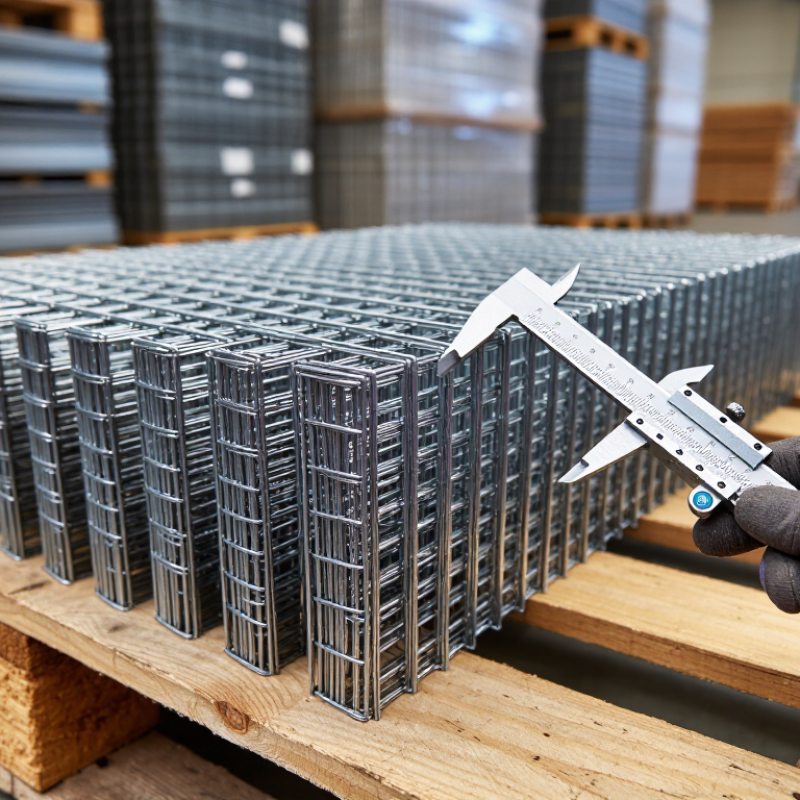
Check openings, wire diameter, and weld quality against ASTM A1064 before approving steel wire mesh. Measure openings from wire center to wire center, not from edge to edge. A small measuring error can change concrete cover and reinforcement spacing. Use a calibrated steel rule and check several locations across each sheet or roll. Do not trust one sample alone.
Measure wire diameter with a micrometer on clean, undamaged wire. Compare plain or deformed wire details with the purchase specification and the applicable ASTM A1064 requirements. Request material certificates showing the tested mechanical and chemical properties. Certificates matter, but they are not a substitute for inspection. I have seen correct paperwork paired with poorly labeled bundles. That mistake delayed installation.
Inspect every weld visually for consistent intersections, clean fusion, and missing welds. Ask for weld shear testing when the project specification requires it. Uneven weld marks may signal heat or alignment problems. Confirm sheet length, width, bundle tags, and protective packaging before shipment. Salt air and condensation can quickly stain unprotected mesh during overseas transport. Photographs help, though they can hide a weak joint. A hands-on inspection remains more reliable. Check the current ASTM edition and local engineering requirements, since project conditions may demand tighter controls.
Verify Mill Certificates, Tolerances, Packaging, and Incoterms for Delivery
For global steel wire mesh projects, procurement should begin with evidence, not attractive pricing. Request the mill certificate before approving production. Check the heat number, steel grade, wire diameter, tensile strength, and coating details. Match every value against the purchase specification. A certificate without traceable batch information is weak evidence. Ask for independent test reports when the application carries structural risk. Keep the inspection records with the shipping documents.
Tolerances deserve equal attention.
Confirm wire diameter, opening size, panel length, width, flatness, and weld strength. Small variations can disrupt installation across hundreds of panels.
I once saw a project accept a broad tolerance that later caused costly site adjustments. The specification was technically valid, but poorly suited to the installation method.
Packaging must protect edges, welds, and coated surfaces from moisture and impact. Use export-grade pallets, secure bundles, weather-resistant wrapping, and clear labels. Include bundle numbers and lifting instructions.
Write the Incoterm and named delivery place precisely. Also state the version used. Clarify export clearance, freight, insurance, unloading, and damage responsibility. Ask who handles import documents and port charges. Do not assume these duties are understood. A pre-shipment inspection should verify quantity, markings, packaging, and random dimensions. Photographs help, but they cannot replace measurement records. Build a simple document checklist. Leave room for correction, because even experienced teams can overlook one critical tolerance.