Best Tips for Choosing Continuous Oven Mesh Belt?
Choosing the right Continuous Oven Mesh Belt is essential for efficient baking and cooking processes. This equipment plays a vital role in commercial kitchens and food production lines. A quality belt ensures uniform heat distribution and prevents food deformation. Various materials and designs are available, making the selection process daunting for many operators.
Importance lies in understanding your specific needs. Consider the temperature range and the types of food you prepare. Some materials may warp under high heat, while stainless steel offers durability. It's crucial to evaluate the belt's compatibility with your oven model. Minor misalignments can lead to significant production issues.
Exploring options requires reflection on your operational goals. Take the time to research and consult with industry experts. While many choices exist, a well-informed decision boosts efficiency. Adapting to changes in production demands may lead you to reconsider your original choice. The right Continuous Oven Mesh Belt ultimately enhances your cooking efficiency and product quality.

Understanding the Role of Continuous Oven Mesh Belts in Industrial Cooking
Continuous oven mesh belts play a vital role in industrial cooking processes. Their design allows for optimal heat distribution, ensuring that food products are cooked evenly. Unlike traditional cooking methods, mesh belts provide a continuous flow, which increases productivity. The materials used in these belts also contribute to their functionality, as they must withstand high temperatures and resist corrosion.
When choosing a continuous oven mesh belt, consider durability and maintenance. Look for belts made from materials like stainless steel or special heat-resistant alloys. These can last longer and require less upkeep. A well-chosen belt can improve efficiency in the long run, but not all options are created equal.
Evaluate the belt's mesh size as well; it directly influences airflow and heat penetration. A smaller mesh size can trap more moisture, while a larger one allows for crispy textures. It's essential to balance these factors according to your specific cooking needs. Sometimes, however, you may need trial and error to find the right fit. Assessing your cooking process will lead to better outcomes and save costs.
Best Tips for Choosing Continuous Oven Mesh Belt
The chart above illustrates the importance ratings of various factors to consider when choosing a continuous oven mesh belt. Durability and heat resistance stand out as the most critical factors, while cost efficiency ranks lower. Understanding these dimensions can greatly influence effective decision-making in industrial cooking applications.
Key Factors to Consider When Selecting a Continuous Oven Mesh Belt
When selecting a continuous oven mesh belt, consider several key factors. The choice of material is crucial. Stainless steel is commonly preferred due to its durability and resistance to corrosion. According to industry studies, stainless steel belts have a lifespan that can exceed five years with proper maintenance. A belt made from the right material can withstand high temperatures, ensuring that it performs well in continuous baking processes.
The mesh design is another vital aspect. A well-designed mesh belt promotes even heat distribution, which is critical for consistent cooking results. Research indicates that belts with smaller mesh openings can improve airflow and enhance product quality. However, smaller openings may also result in increased buildup of residues, necessitating more frequent cleaning.
It’s essential to assess the belt width and length tailored to your production line. A mismatch can lead to inefficiencies and higher operational costs. Additionally, consider the ease of maintenance. Simple cleaning protocols can save time and resources. Selecting the right continuous oven mesh belt can significantly affect production efficiency and product quality. However, overemphasis on one factor, such as cost, often leads to costly mistakes in the long run.
Material Options for Continuous Oven Mesh Belts: Pros and Cons
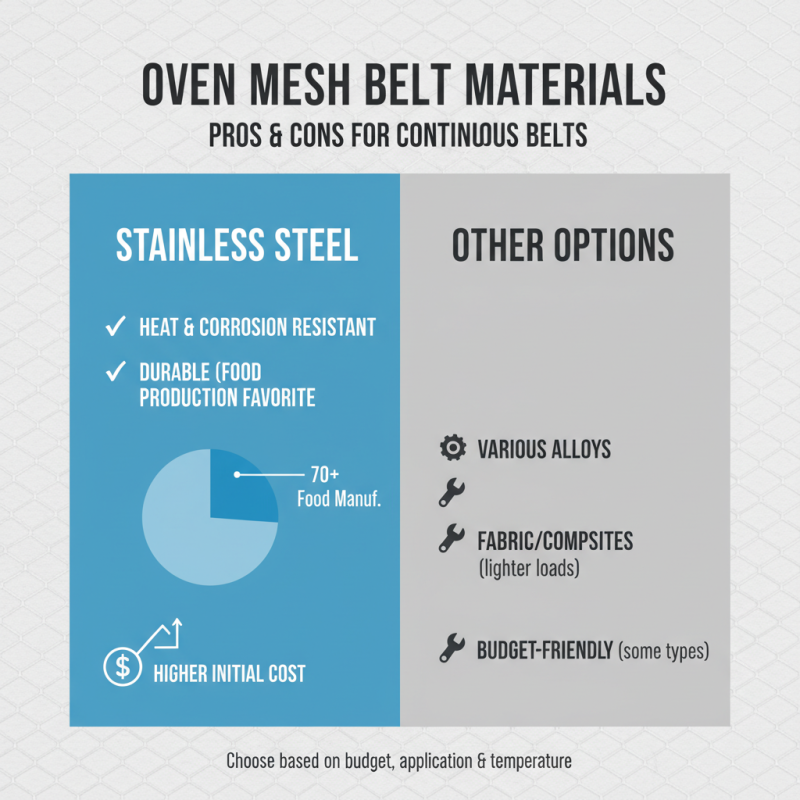
When selecting a continuous oven mesh belt, the choice of material greatly influences durability and performance. Stainless steel is often favored for its resistance to heat and corrosion. It's reliable in food production, with studies showing that over 70% of manufacturers prefer it for such applications. However, stainless steel can have a higher initial cost, which may not suit all budgets.
Another popular option is carbon steel. It's cost-effective and strong, making it suitable for many production environments. Yet, it can rust and may require additional coatings or treatments. Such maintenance can lead to increased long-term costs, which some businesses may overlook.
Lastly, consider thermoplastic materials. They offer flexibility and lower weight but might not withstand extreme temperatures as well as metals. It's essential to weigh these pros and cons carefully. Decisions should account for heat resistance, cleaning ease, and life cycle costs. Manufacturers need to reflect on these factors to ensure they invest wisely in their production processes.
Evaluating Temperature Resistance and Durability in Mesh Belts
When selecting a continuous oven mesh belt, evaluating temperature resistance and durability is crucial. Mesh belts often undergo extreme heat and stress. According to industry reports, belts may need to withstand temperatures up to 1,200°F (650°C) in some applications. However, high temperatures can accelerate wear and tear.
Durability often hinges on materials used. Stainless steel is popular due to its sturdiness and resistance to corrosion. However, some belts incorporate specialized coatings that enhance performance. These coatings can improve thermal stability but may chip over time. A study in the Journal of Manufacturing Science indicates that poorly chosen materials can lead to a 25% reduction in the lifespan of a mesh belt.
Periodic assessments are essential. Monitoring for signs of damage can prevent unexpected failures. Many operators overlook minor fraying or discoloration, which might indicate deeper issues. An article from the International Journal of Industrial Engineering emphasizes the importance of routine maintenance. Regular checks can prolong the belt's life and ensure optimal performance.
Best Tips for Choosing Continuous Oven Mesh Belt? - Evaluating Temperature Resistance and Durability in Mesh Belts
| Mesh Belt Type |
Material |
Temperature Resistance (°C) |
Max Load (kg/m²) |
Durability Rating (Cycles) |
| Flat Wire |
Stainless Steel |
550 |
250 |
50000 |
| Mesh Wire |
Inconel |
900 |
200 |
60000 |
| Edge Reinforced |
Carbon Steel |
400 |
300 |
30000 |
| Teflon Coated |
Stainless Steel |
260 |
150 |
40000 |
| Composite Mesh |
Metal-Plastic Blend |
250 |
120 |
35000 |
Maintenance Tips for Longevity of Continuous Oven Mesh Belts
Continuous oven mesh belts play a critical role in industrial baking and drying processes. Proper maintenance is essential for their longevity. Regular inspection is vital. Look for signs of wear, such as fraying or broken wires. These can lead to larger issues if not addressed promptly.
Cleaning the belts is equally important. Use mild detergents and avoid harsh chemicals that can cause damage. Accumulated debris can lead to inefficiencies and even overheating. Keep the belts dry and store them in a cool area.
Moisture can lead to corrosion and weaken the material. Additionally, pay attention to the tensioning system. Over-tightened belts can lead to premature wear. Under-tightened belts may slip or misalign. Balancing the tension ensures optimal performance. Remember, even little oversights can impact efficiency. Adjustments may seem minor but can greatly affect the belt's lifespan.