How to Choose the Right Industrial Belting for Your Needs?
Choosing the right industrial belting is crucial for optimizing efficiency and safety in manufacturing processes. Industrial belting serves as the backbone of several production lines. Selecting the proper type can enhance productivity. However, many companies struggle to make the best choice.
Understanding the materials and specifications of industrial belting is essential. There are various types—each with its unique properties. A rubber belt might be suitable for one application, while a plastic belt may be more effective for another. Each selection can significantly impact your operations.
Moreover, consulting with industry experts can provide insights. They can guide you through the complexities of belting options. Balancing cost with quality is often challenging. Regular assessments are vital to ensure your choices remain relevant. Reflecting on past decisions helps improve future selections. The importance of industrial belting cannot be overstated. Proper choices lead to smoother operations and better results.
Understanding the Different Types of Industrial Belting Available
When selecting industrial belting, understanding the types available is crucial. Various options cater to specific applications. There are flat belts, timing belts, and V-belts, each serving different purposes. Flat belts excel in power transmission over long distances. They are useful in conveyor systems. Timing belts offer precision in synchronizing rotations. They work well in machinery demanding exact movements.
V-belts are another popular choice. They grip pulleys effectively and handle heavy loads. Yet, choosing the right belt can be complicated. Factors like temperature and environmental conditions matter. Sometimes, what seems ideal may not last. For instance, a belt that performs well indoors might struggle outdoors. Taking time to assess these details will save costs and enhance efficiency.
Consider the material of the belt, too. Rubber, polyurethane, and leather are common options. Each has its strengths and weaknesses. Rubber is durable but may degrade under UV light. Polyurethane is versatile but can be expensive. Leather is reliable, yet not always suitable for high-speed applications. Reflecting on these factors can lead to a more informed choice. Understanding the context of each type is key to maximizing performance.
Key Factors to Consider When Selecting Industrial Belts
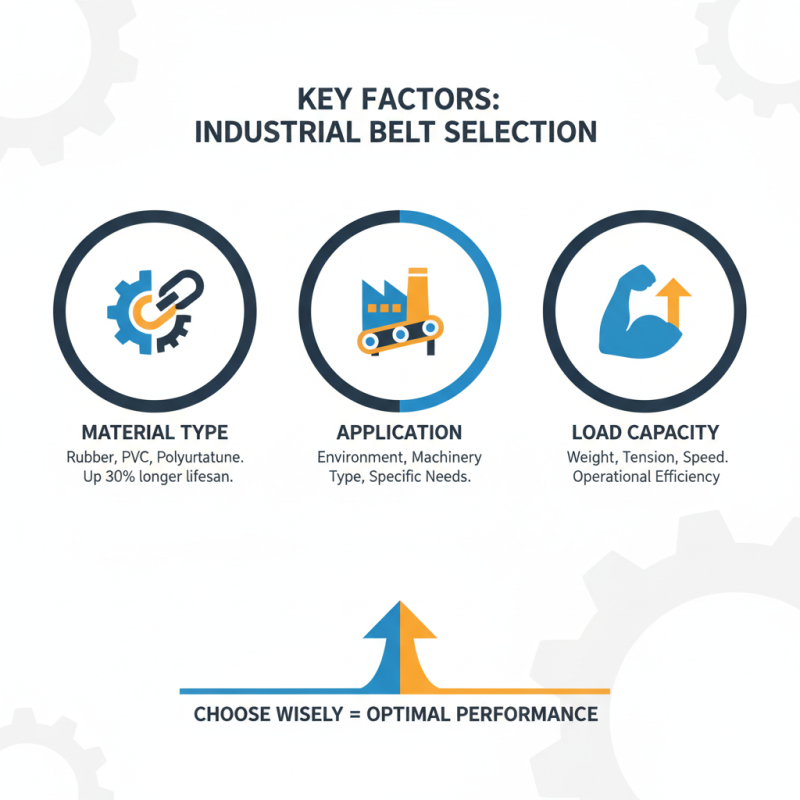
Choosing the right industrial belting is crucial for operational efficiency. Key factors to consider include material type, application, and load capacity. Reports indicate that material selection can improve belt lifespan by up to 30%. Common materials include rubber, PVC, and polyurethane, each serving different environments. Evaluate the specific needs of your machinery before making a choice.
Tip: Assess the operating temperature and exposure to chemicals. This evaluation helps in selecting the best material. Each environment poses unique challenges. For example, high-temperature settings often require specialized materials. Overlooking this can lead to frequent replacements.
Additionally, consider load capacity and belt width. Load capabilities are essential for preventing slippage and wear. Belts with insufficient capacity can lead to premature failure. Industrial reports suggest that choosing an appropriate width can improve load distribution by 20%.
Tip: Regularly monitor belt performance. Timely adjustments can prevent costly downtime. Understanding wear patterns helps in making informed decisions when it’s time to replace the belt.
Evaluating the Environmental Conditions for Belt Performance
When selecting industrial belting, environmental conditions play a critical role in performance. Factors such as temperature, humidity, and exposure to chemicals can significantly impact the lifespan and effectiveness of belts. Industry reports indicate that belts exposed to extreme temperatures can experience a reduction in flexibility, compromising their real-world application. For instance, belts operating in environments above 150°F may lose tensile strength, which could lead to premature failure.
Moisture is another key factor. High humidity levels can promote the growth of mold and mildew on fabric belts. Reports suggest that up to 30% of belt failures can be attributed to moisture-related issues. If a facility operates in an area with high humidity, its belting system may require additional protective measures. Regular audits can identify whether existing belts meet the necessary environmental demands.
Chemical exposure also raises concerns. Some materials can degrade rapidly when in contact with certain chemicals. In terms of statistics, around 25% of industrial maintenance costs arise from belting failures due to environmental neglect. Evaluating the specific chemicals present in an industrial environment is crucial for effective belt performance. Choosing the right materials can ensure longevity and reliability in demanding conditions.
Calculating Load Capacity and Durability Requirements for Belting
When selecting industrial belting, understanding load capacity is crucial. Each application has specific demands. It’s essential to calculate the weight and size of items being transported. Consider factors such as speed and incline as they affect belting performance. Materials used in belting also play a role in its load capacity.
Tips: Always consult with manufacturers about your needs. They can provide insights into the best materials for durability and strength. Keep in mind that a higher load capacity often means a more robust and heavier belt.
Durability is another key consideration. Industrial belts can face harsh environments. Exposure to chemicals and temperature changes can wear them down. Assess the working conditions before choosing a belt. This will help you avoid frequent replacements.
Tips: Analyzing past performance of similar belts can provide valuable data. Sometimes it’s insightful to focus on long-term costs instead of initial expenses. Reflect on these aspects as choosing the right belting is not always straightforward.
Choosing the Right Belt Material for Specific Applications
Choosing the right belt material is crucial for ensuring optimal performance in industrial applications. Different environments require various materials to withstand unique pressures. Rubber, for example, provides excellent flexibility and can absorb shock well. It is ideal for dynamic applications. However, rubber can degrade in high-temperature settings.
On the other hand, polyurethane is robust and resistant to abrasion, making it suitable for harsh conditions. It performs well in food processing and chemical industries. Choosing the right belt often involves weighing these factors against cost and longevity. Many users find themselves overwhelmed by choices and may overlook critical aspects of their specific situation.
When evaluating belt materials, consider the environment. If moisture or corrosive substances are present, certain materials will not hold up. Conducting a thorough analysis can help make a more informed decision. Often, users must balance durability with flexibility and price. If a belt fails, the consequences can be significant. Reflecting on past experiences can aid in future selections.
How to Choose the Right Industrial Belting for Your Needs? - Choosing the Right Belt Material for Specific Applications
| Belt Type |
Material |
Application |
Temperature Range (°F) |
Load Capacity (lbs) |
| Flat Belt |
PVC |
Conveying Goods |
-20 to 180 |
200 |
| Timing Belt |
Nylon |
Power Transmission |
-40 to 220 |
300 |
| Modular Belt |
Polypropylene |
Food Processing |
-20 to 180 |
150 |
| V-Belt |
Rubber |
Heavy Machinery |
-40 to 180 |
500 |
| Incline Belt |
Silicone |
Packaging |
-30 to 150 |
180 |