What Is a Conveyor Belt and How Does It Work?
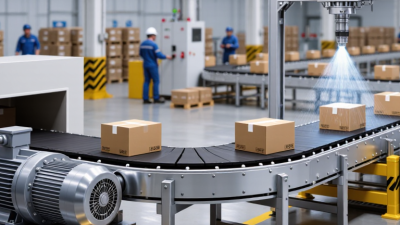
A Conveyor Belt is more than a moving strip of rubber. It is a controlled transport system that carries materials between loading, processing, and discharge points. At its core, the system uses a continuous belt, drive pulley, return pulley, idlers, a motor, and a tensioning arrangement. The motor turns the drive pulley. Friction moves the belt. Materials ride on its upper surface, while the return strand travels underneath.
The scale of this industry is substantial. Grand View Research reported that the global conveyor belt market was valued at approximately USD 4.2 billion in 2023, with continued growth expected through 2030. MarketsandMarkets has also identified automation, mining, logistics, and parcel handling as major forces behind conveyor system demand. These figures show commercial importance, but they do not explain everyday performance. A misaligned belt can scrape its edges against the structure. A poorly loaded belt can spill material within minutes.
Lawrence Nordell, a respected conveyor designer and president of Conveyor Dynamics, has emphasized, “The belt is not a rubber band.” That short warning matters. Belt selection depends on load, speed, temperature, material properties, incline, and operating environment. It also requires practical inspection. Listen for unusual pulley noise. Watch for mistracking. Check whether dust gathers beneath the return run.
The basic idea seems simple. Real systems are not. Their reliability depends on engineering details, maintenance discipline, and decisions made during installation. A conveyor may move thousands of tonnes daily, yet one overlooked splice can interrupt an entire production line.
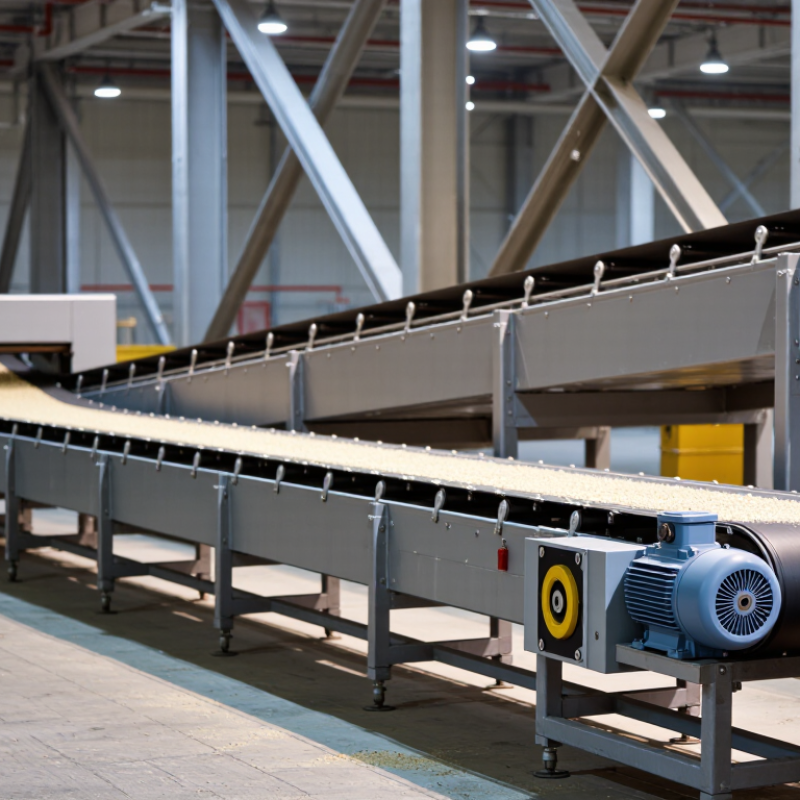
Conveyor Belt Definition: Components, Materials, and Common Industry Types
A conveyor belt is a continuous moving surface that transfers materials between points. Its basic assembly includes a belt, drive pulley, tail pulley, idlers, frame, motor, gearbox, and tensioning device. The motor turns the drive pulley, while friction carries the belt and its load forward. Belt speed, load weight, incline, and pulley diameter must work together.
Materials determine performance. Rubber belts handle many bulk materials, while PVC and polyurethane suit cleaner processing areas. Steel-cord belts support long, high-tension routes; textile belts remain lighter and more flexible. Cleats, sidewalls, and textured surfaces help control loose products. The boundary is not always neat. A belt selected for abrasion resistance may sacrifice flexibility, and a food-grade surface still needs careful sanitation.
Common industry types include flat belts for parcels, troughed belts for mining, cleated belts for elevation, and enclosed tubular belts for dust-sensitive transport. A field inspection should check mistracking, splice damage, roller noise, and material buildup. Small faults become expensive interruptions. Grand View Research estimated the global conveyor belt market at about USD 4.5 billion in 2023 and forecast continued growth through 2030. MHI’s 2024 Annual Industry Report also recorded rising investment interest in automation and digital supply-chain tools. Those figures suggest demand is expanding, but they do not remove basic engineering limits. A poorly aligned belt still fails.
How Conveyor Belts Move: Drive Pulleys, Idlers, Tension, and Friction
A conveyor belt is a continuous moving surface that carries materials between locations. Its movement depends on coordinated mechanical forces. The drive pulley supplies rotation, while the belt transfers that motion along its length. It sounds simple. In practice, small alignment errors can change the entire system.
The drive pulley usually connects to a motor and turns because of applied torque. Friction between the pulley and belt prevents unwanted slipping. A lagged or textured pulley surface can improve grip, especially when dust or moisture reduces contact. Idlers support the belt between pulleys. They reduce sag, guide the belt, and help spread the load across its width. A return idler supports the empty belt underneath. Without suitable support, the belt may rub against the structure.
Tension keeps the belt tight enough to carry force from the drive pulley.
Too little tension can cause slipping, wandering, and material spillage. Too much tension increases stress on the belt, bearings, and frame. Correct tension must match belt length, load, incline, and operating conditions. During inspection, technicians often check pulley alignment, unusual noise, belt tracking, and uneven wear. These details reveal problems early. Still, visual checks are not perfect. Temperature changes and overloaded sections can hide developing faults. Regular measurements provide more reliable evidence than guessing by appearance.
Material Handling Capacity: How Belt Width and Speed Reach 15,000 t/h
What Is a Conveyor Belt and How Does It Work?
A conveyor belt moves bulk material continuously between loading and discharge points. Its capacity depends mainly on belt width, belt speed, material density, and the loaded cross-section. A narrow belt carrying gravel at low speed may handle only a few hundred tonnes per hour. In contrast, a wide belt running at 5–7 m/s can approach 15,000 t/h in large-scale mining or port systems. That figure is not automatic. Spillage, moisture, belt sag, transfer delays, and uneven loading can reduce real output. A clean calculation can still mislead.
Tips: Check capacity using actual bulk density, not a catalog estimate. Measure the material’s moisture and particle size. A 3.2-meter belt may carry much more than a 2-meter belt, but only when the loading chute forms a stable, centered flow. Keep belt speed within a practical range. Excessive speed can increase dust, wear, and mistracking. Small alignment errors matter.
In field work, operators often compare theoretical capacity with hourly weigh-scale data. This exposes hidden losses. For example, a system rated at 15,000 t/h may deliver less during wet weather or frequent truck changes. Regular inspections should cover idlers, pulleys, scrapers, emergency stops, and belt joints. I would also leave operating margin; running at the absolute limit looks efficient, but it can shorten equipment life. DC the calibration often.
Conveyor Belt Material Handling Capacity
Indicative bulk-material capacity by belt width at an operating speed of approximately 5 m/s. Actual capacity depends on material density, surcharge angle, trough geometry, loading conditions, and safety margins.
Wider belts and higher belt speeds generally increase throughput. Large overland and mining conveyors can approach 15,000 t/h when designed with wide belts, suitable bulk material, and optimized loading conditions.
Safety and Maintenance: ISO 14890 Belting Standards and Failure Prevention
A conveyor belt carries bulk materials across rollers, pulleys, and loading points. The drive pulley creates motion, while tension keeps the belt engaged with the system. In practice, small problems often start at transfer zones. Misaligned chutes, sharp rocks, and uneven loading can damage the belt within hours.
ISO 14890 provides requirements for rubber and plastic-covered conveyor belting used in general material handling. It addresses belt construction, dimensions, performance, and test methods. Selecting compliant belting helps engineers compare quality consistently. However, compliance alone does not prevent failure. Belt covers must match the material, temperature, moisture, and chemical exposure. The wrong cover may harden, swell, or crack.
Watch the details.
Inspect belt edges, splice areas, covers, and fasteners during scheduled stoppages. Frayed edges often indicate tracking problems. Longitudinal cuts may reveal trapped material near a loading point. Measure belt tension and check pulley alignment before adjusting tracking. Excessive tension can damage bearings and splices. Insufficient tension can cause slipping and cover wear. Clean return rollers regularly, because seized rollers create heat and resistance. Keep accurate records of defects, repairs, operating hours, and load conditions.
No inspection plan is perfect. A checklist may miss vibration or intermittent slipping. Train competent personnel to investigate unusual noise, dust, heat, or belt movement. Use isolation procedures before hands-on maintenance. Review failures honestly, including poor loading practices or delayed repairs. ISO 14890 supports reliable belt selection, but disciplined operation determines how long the system actually performs.