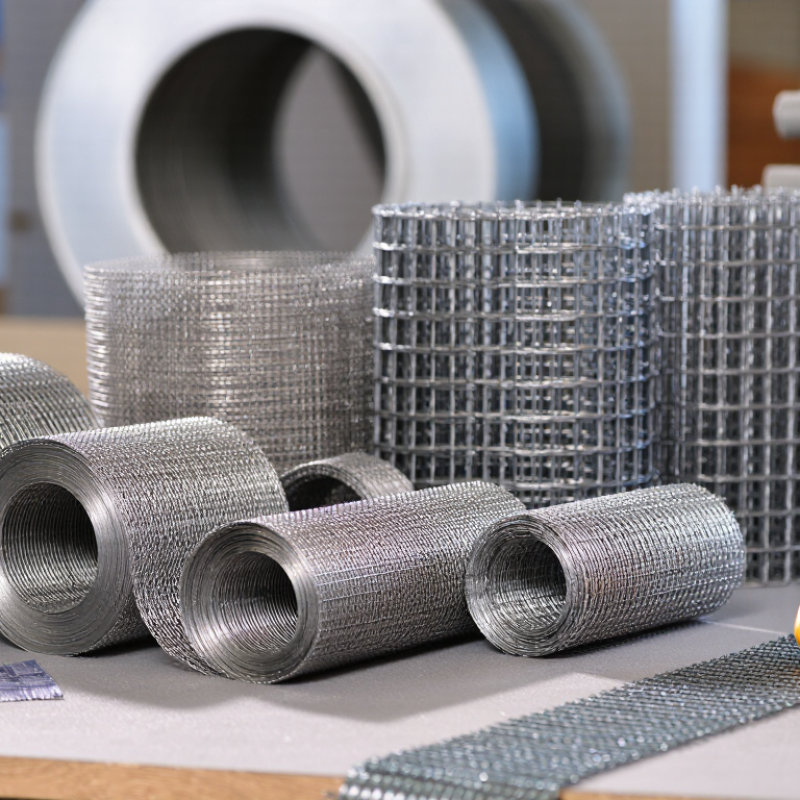
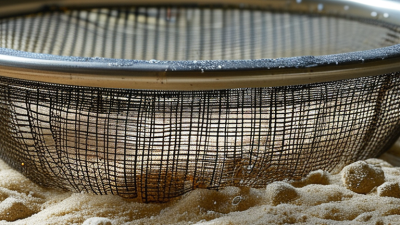
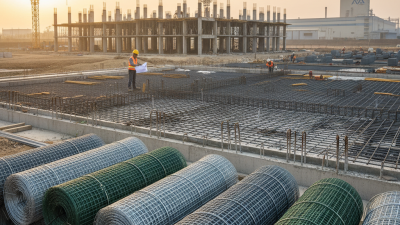
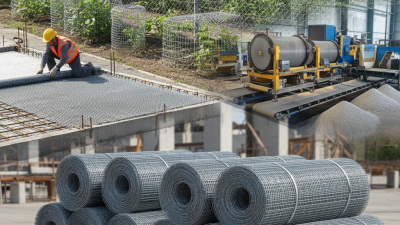
Choosing the right Wire Mesh begins with the task, not the catalogue image. A bright stainless-steel screen may look suitable, yet fail under vibration, heat, corrosion, or repeated cleaning. The opening size, wire diameter, weave pattern, tensile strength, and surface finish must match the working environment.
Industry data shows why this decision matters. Grand View Research identifies construction, filtration, mining, and automotive manufacturing as major demand sectors for wire mesh products. Its market analysis also expects continued growth as industries seek durable, lightweight, and recyclable materials. The Freedonia Group similarly reports rising demand for metal products used in filtration and infrastructure applications. These reports provide direction, not a final specification.
“Performance starts with understanding the application, not simply selecting a mesh size,” says Dr. Mark J. R. Smith, an industrial filtration specialist. His point is practical. A 100-micron opening may perform well in laboratory conditions, but production dust, pressure surges, or blocked apertures can change the result.
Small details matter.
For example, a woven mesh may suit particle separation, while welded mesh may better support fencing, machine guards, or concrete reinforcement. Stainless steel 316 often offers stronger corrosion resistance than 304 near saltwater or chemical exposure. However, the wrong alloy can still increase cost without improving service life.
Standards such as ASTM E2016 and ISO 4782 help define mesh terminology and testing practices. They do not replace field experience. Before ordering, record temperature, load, particle size, cleaning method, and expected lifespan. Then question the first specification. It may be convenient, but not necessarily correct.
Defining your wire mesh requirements starts with the job itself, not its appearance. In project reviews, I ask what must pass through and what must stay out. Record the required opening size in millimeters. A 10 mm opening behaves very differently from a 2 mm opening. Be precise. Consider whether the mesh will filter particles, protect equipment, support weight, or provide ventilation. These functions require different designs.
Wire diameter affects strength, flexibility, weight, and visibility. Select the material according to the working environment. Stainless steel suits many damp or corrosive areas, while coated or galvanized steel may fit less demanding conditions. Salt air changes the decision. Chemical exposure, heat, cleaning methods, and outdoor moisture deserve careful review. I have sometimes focused too heavily on strength and overlooked cleaning access. That mistake can create maintenance problems later.
Define panel dimensions, tolerances, edge treatment, and attachment methods before requesting quotations. Welded mesh and woven mesh may perform differently under vibration or repeated handling. If people may touch the surface, check for sharp burrs. Confirm load requirements through engineering calculations or test data, rather than guesswork. Request material certificates and aperture verification when consistency matters. The first specification is rarely complete. Review it with the installer, operator, and safety specialist before production.
Choosing wire mesh starts with the environment, not the price. Low-carbon steel offers high strength and easy fabrication. However, it can rust quickly in humid or coastal areas. Galvanized steel adds a zinc layer for improved corrosion resistance. Stainless steel performs better around moisture, chemicals, and food-processing equipment. Aluminum is lightweight and naturally corrosion resistant, but it bends more easily under heavy loads. The right choice depends on load, exposure, opening size, and maintenance access.
The NACE IMPACT study estimated that corrosion costs about 3.4% of global gross domestic product, or roughly $2.5 trillion annually. This figure shows why material selection deserves careful attention.
The World Steel Association reported approximately 1.89 billion tonnes of crude steel production in 2023. Steel remains widely available, but availability does not guarantee suitability. A cheaper mesh may create higher replacement costs later. I have seen projects specify stainless steel without checking chloride exposure. That decision looked safe, but it was not fully examined.
Request mill certificates and confirm wire diameter with calipers. Test a small panel before ordering the full quantity. Check weld quality at intersections. For outdoor use, inspect cut edges because damaged coatings can fail first. When comparing stainless grades, verify the actual chemical environment. A simple salt spray result may not represent real service conditions. For demanding applications, ask an engineer to review load and corrosion assumptions.
Choosing the right wire mesh starts with the opening size. Ask what must pass through, and what must stay out. For screening fine powder, a smaller opening improves separation. For drainage or ventilation, larger openings usually reduce blockage. Do not select mesh by opening size alone. Wire diameter changes strength, weight, and open area. A thick wire may survive vibration, but it can restrict flow. A thin wire offers more open space, yet it may deform under impact.
In field installations, I measure the material, temperature, moisture, and expected load before ordering. A mesh exposed to abrasive stone needs a different balance than one handling dry grain. A 10-millimeter opening with heavy wire behaves differently from the same opening with light wire. Check the clear opening, not only the nominal mesh count. Measurement methods can vary. Request tolerances, material grade, and test data. When safety matters, compare the selection with applicable engineering standards and local requirements. I also suggest testing a small sample in real conditions. It can reveal clogging, sagging, or unexpected wear before full installation.
The strongest mesh is not always the best choice. It may cost more and reduce efficiency. I once favored a heavier wire, then found it trapped material too easily. That mistake changed my process: define the required opening first, then verify strength. Leave room for uncertainty. Actual materials vary, and site conditions are rarely ideal. If the mesh will be tensioned, supported, or cleaned mechanically, include those forces in the decision. A qualified engineer should review critical applications.
Choosing mesh starts with the opening, not the catalog photograph. In field inspections, I measure the required particle size and compare it with the mesh aperture. Plain weave suits general screening and offers predictable openings. Twilled weave handles finer wire and greater load. Dutch weave provides tight filtration, but it can restrict flow quickly. Keep wire diameter visible in the specification. A small change can alter strength, pressure drop, and cleaning behavior. Looks simple. It rarely is.
Coatings deserve equal attention. A polymer coating can protect against moisture and reduce contact damage. It may soften under heat, shed particles, or hide surface defects. Metallic coatings improve corrosion resistance, yet dissimilar metals can create galvanic problems in wet assemblies. Ask for coating thickness, adhesion results, and service-temperature limits. Do not accept “corrosion resistant” without test conditions. Salt spray data helps, but it cannot reproduce every installation environment.
Surface treatment controls cleanliness and friction. Passivation can improve stainless steel’s resistance after fabrication. Electropolishing may reduce roughness, especially where residue cannot remain in small valleys. Brushing, blasting, and tumbling create different textures. They may also change the mesh opening slightly. I once selected a beautifully finished screen before checking its cleaning method. That was a mistake. Confirm inspection records, aperture measurements, and treatment compatibility before approving the final mesh.
Wire mesh should be selected from measured performance, not appearance. Define the opening size, wire diameter, load, exposure, and required service life. For welded reinforcement, ASTM A1064/A1064M specifies steel wire requirements and dimensional controls. ISO 4783-1 also provides guidance for industrial wire screens and aperture tolerances. Ask for mill certificates, test results, and coating thickness records. A mesh that looks uniform may still fail inspection.
Corrosion deserves careful attention. The NACE IMPACT study estimated global corrosion costs at approximately 2.5 trillion US dollars annually, equal to about 3.4% of global GDP. Galvanized or stainless wire may suit humid, coastal, or chemically exposed locations. However, coating choice alone is not enough. Cut edges, damaged welds, and trapped water can shorten service life. That detail is easy to miss.
Installation requirements must match the design. Confirm support spacing, lap length, fastener compatibility, edge restraint, and access for maintenance. For safety barriers, ISO 14120 addresses guard design principles, while local building and occupational standards may impose additional requirements. Keep records on site. Verify the actual aperture with calipers, not a ruler. A common shortcut is using heavier wire to compensate for poor support. It may increase weight without solving deflection. The specification might still be wrong. Review it against real loading, handling limits, and the installer’s experience.
| Selection Dimension | Typical Options | Recommended Use | Performance Considerations | Applicable Standards or Verification | Installation Requirements |
|---|---|---|---|---|---|
| Mesh Construction |
Woven mesh Plain weave, twill weave, or Dutch weave |
Filtration, screening, particle separation, and general-purpose enclosures | Woven mesh provides accurate openings and broad filtration options. Twill and Dutch weaves can support finer filtration than standard plain weave. | Verify mesh count, wire diameter, aperture, and weave type. Industrial woven wire cloth may be specified under ISO 9044. | Use a rigid frame or properly tensioned support where vibration, sagging, or repeated cleaning is expected. |
| Mesh Construction |
Welded mesh Resistance-welded intersections |
Guards, partitions, animal enclosures, concrete reinforcement, and general barriers | Welded intersections provide dimensional stability and a flat, rigid panel. Load capacity depends on wire diameter, spacing, support span, and weld quality. | For carbon-steel welded wire reinforcement, verify the applicable ASTM A1064 requirements. Confirm panel tolerances and weld integrity. | Provide suitable posts, clips, or edge frames. Protect cut edges and repair damaged coatings where required. |
| Opening Size | Small openings: approximately 0.025–1 mm Medium openings: approximately 1–10 mm Large openings: above 10 mm |
Choose according to the smallest particle to retain or the largest object to pass through | Smaller openings improve separation but generally increase pressure drop, clogging risk, and cleaning requirements. | Specify the clear aperture rather than mesh count alone. Aperture is affected by both mesh count and wire diameter. | Allow access for cleaning, inspection, and replacement, particularly when the mesh is used for dust or liquid filtration. |
| Wire Diameter | Common wire diameters: approximately 0.025–6 mm, depending on mesh type and application | Use finer wire for filtration and heavier wire for impact resistance or structural screening | Larger wire generally increases strength and abrasion resistance but reduces the open area for a given mesh count. | Confirm wire diameter tolerance, tensile strength, and material grade on the product specification or inspection report. | Use compatible cutting, bending, and fastening methods. Avoid excessive deformation at fastening points. |
| Open Area | Often specified as a percentage of the total mesh area | Ventilation screens, airflow panels, acoustic barriers, and filtration systems | Higher open area usually reduces airflow resistance but may reduce retention efficiency, privacy, or impact resistance. | Verify the calculated or measured open-area percentage and test conditions. Do not infer open area from mesh count alone. | Keep the support frame from blocking the intended open area. Include a margin for installation overlaps and edge returns. |
| Material |
Stainless steel Common grades include 304 and 316 |
Food processing, chemical service, humid environments, and applications requiring corrosion resistance | Grade 316 generally offers better resistance to chloride-containing environments than grade 304. Neither grade is universally corrosion-proof. | Stainless-steel wire cloth is commonly specified to ASTM A580/A580M. Verify grade, finish, and corrosion exposure. | Avoid contamination from carbon-steel tools or fasteners. Use compatible stainless or corrosion-resistant fixings where necessary. |
| Material |
Galvanized carbon steel Hot-dip or electro-galvanized |
Outdoor fencing, guards, agricultural barriers, and general industrial screening | Zinc coating provides sacrificial corrosion protection. Hot-dip coatings are typically more robust than electro-galvanized coatings for severe outdoor exposure. | Verify coating class or mass in accordance with ASTM A641/A641M, where applicable. Confirm whether welding occurs before or after galvanizing. | Repair exposed steel at cut edges with a compatible zinc-rich repair coating when permitted by the project specification. |
| Material | PVC- or polymer-coated steel | Fencing, safety barriers, landscaping, and applications requiring added electrical isolation or color coding | The polymer layer improves surface protection but can be damaged by cutting, impact, ultraviolet exposure, or high temperature. | Verify coating thickness, adhesion, ultraviolet resistance, temperature range, and the relevant project coating specification. | Use coated-compatible clamps and avoid sharp bends that could crack or detach the coating. |
| Load and Impact | Light, medium, or heavy-duty mesh selected by wire diameter and support spacing | Machine guards, safety screens, walkways, storage cages, and impact barriers | Check tensile strength, deflection, impact energy, panel span, and fastening capacity. Mesh alone should not be treated as a structural frame. | Use project-specific structural calculations and applicable safety-guard or barrier requirements. Verify test loads where required. | Design posts, frames, anchors, and fasteners as one system. Prevent sharp exposed ends and maintain required safety clearances. |
| Temperature and Chemical Exposure | Ambient service, elevated temperature, wet service, acidic, alkaline, or solvent exposure | Choose the material and coating based on the actual operating environment | Temperature can reduce coating life or alter polymer properties. Chemicals may attack the wire, welds, coating, or fastening hardware. | Review chemical compatibility data, operating temperature, concentration, exposure duration, and cleaning chemicals before approval. | Prevent dissimilar-metal contact where galvanic corrosion is possible. Provide drainage and avoid trapped moisture. |
| Filtration Performance | Nominal or absolute filtration rating, pressure drop, dirt-holding capacity, and cleaning method | Air, gas, liquid, dust, and process-material filtration | Filtration performance depends on particle shape, particle-size distribution, flow rate, viscosity, pressure, and filter loading—not aperture alone. | Define the test method and acceptance criteria. Request measured aperture distribution, flow resistance, and filtration efficiency where critical. | Install with the correct flow direction and adequate sealing. Provide differential-pressure monitoring when clogging can affect operation. |
| Fabrication and Finish | Cut-to-size panels, rolls, discs, baskets, screens, bends, and framed assemblies | Projects requiring repeatable dimensions or ready-to-install components | Cutting and forming can alter flatness, edge condition, coating coverage, and aperture geometry. | Verify dimensional tolerances, edge finish, weld condition, surface treatment, and inspection documentation. | Confirm the finished opening, frame dimensions, overlap allowance, and access for replacement before fabrication. |
| Installation and Maintenance | Fixed frame, removable cassette, bolted panel, clipped panel, or tensioned roll | Select the arrangement according to cleaning frequency, inspection access, vibration, and replacement needs | Incorrect tension, unsupported edges, blocked openings, and incompatible fasteners can reduce service life and performance. | Document installation torque, fixing spacing, allowable deflection, inspection intervals, and replacement criteria. | Keep mesh taut without overstressing it, support all edges, remove burrs, and schedule periodic checks for corrosion, loosened fixings, and damaged openings. |

Note: Dimensions and material choices shown above are typical engineering selection ranges, not a substitute for project calculations. Confirm the required aperture, open area, load, corrosion exposure, temperature, applicable standards, and installation details before ordering.