
Leave Your Message

10 Tips for Choosing a Material Handling Conveyor Belt

A Material Handling Conveyor Belt may look simple on a plant floor: a moving surface, two pulleys, and a motor. But a poor match can mean spilled product, slipping under load, or hours spent clearing a jam. Choosing well starts with the real job—not just the belt price. Consider the material, load, speed, route, cleaning needs, and operating environment.

Industry reports underline why these decisions matter. MHI’s Annual Industry Report tracks continuing investment in supply-chain technology and automation, while the U.S. Department of Energy notes that industrial motor systems account for a substantial share of manufacturing electricity use. These findings do not prescribe one belt type. They do show why energy demand, uptime, and system compatibility deserve attention alongside capacity. A belt that runs smoothly on a drawing may behave differently around a tight transfer point or a damp washdown area.

Conveyor specialist R. Todd Swinderman has long emphasized the value of practical, system-level conveyor design; his published work points designers toward controlling material flow and spillage, not treating components in isolation. A useful reminder: the belt is part of a system. This guide offers ten selection tips, from cover material and splice design to maintenance access and supplier support. Some choices will still involve trade-offs. That is worth admitting. A careful specification, checked against actual site conditions, is more reliable than a convenient guess.
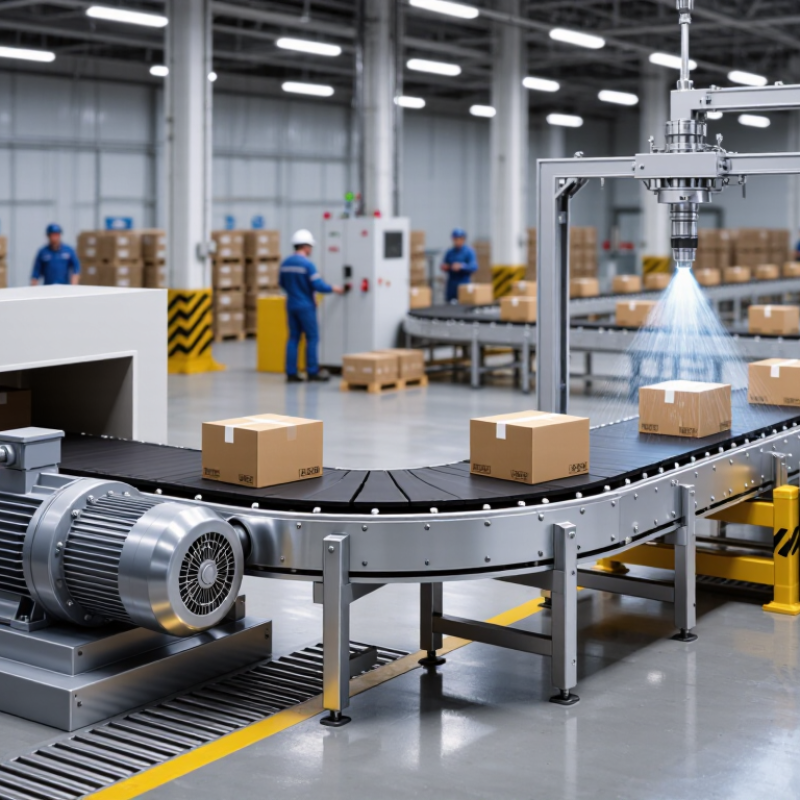
10 Tips for Choosing a Material Handling Conveyor Belt

Identify the Material, Load, and Operating Conditions

Tip 1: Start with the material itself. Dry grain behaves differently from wet, sticky product. Note its temperature, moisture, oil content, abrasiveness, and particle size. Sharp edges can cut a belt; fine dust may collect around rollers. A small sample is useful, but it may not represent every shift. Check for changes between batches.

Tip 2: Describe the load, not just its average weight. Record the heaviest item, total load on the belt, and how material is fed. A sudden drop from a chute can create impact that a steady flow does not. Measure the load’s width, shape, and spacing, too. It is easy to overlook uneven loading. That matters.

Tip 3: Match the belt to its operating conditions. Consider speed, incline, ambient temperature, and exposure to water or cleaning agents. On a steep incline, the surface may need more grip, but added grip can complicate cleaning. Check available space, roller diameter, and expected operating hours. Ask maintenance staff where buildup or mistracking has occurred. Their notes may be incomplete, so verify them on the conveyor. Reassess the choice if the process changes.


Choose Belt Material and Construction for the Application

Choosing a conveyor belt starts with the material it will carry. A belt for dry cartons needs different properties from one carrying wet aggregate. I have seen smooth belts lose grip when dust covered the surface. Small details matter.

Rubber suits many abrasive loads, while PVC handles lighter goods and easier cleaning. Food-contact applications require approved materials and carefully sealed surfaces. Oil, heat, moisture, and chemicals can weaken the wrong belt compound. Check the operating temperature, not just the product temperature. A hot metal part may stay warm long after loading.

Construction matters as much as material. Multiply plies can provide strength and resist tearing under heavy loads. A thicker top cover may survive sharp edges, but it can increase belt weight and energy demand. Fabric direction also affects stretch and tracking. Steel reinforcement offers high tensile strength, although poor alignment can create serious tracking problems.

Consider the conveyor’s length, incline, pulley diameter, and loading impact. A belt with cleats may move boxes uphill, while a rough surface can improve grip on loose products. Match the splice method to the belt structure and maintenance skills available. I once underestimated cleaning time around exposed fasteners. That choice created avoidable labor. Test a sample under real dust, moisture, and load conditions before approving the final construction.、】【

10 Tips for Choosing a Material Handling Conveyor Belt - Choose Belt Material and Construction for the Application

Tip Application condition Material or construction to consider Why it may fit Check before selection
1. Match the cover to the conveyed material General conveying of cartons, parcels, or dry packaged goods PVC- or polyurethane-covered fabric belt Flexible fabric belts are commonly used for unit loads and can provide a smooth conveying surface. Check load weight, pulley diameter, surface grip, and compatibility with cleaning products.
2. Account for oils and grease Oily parts, food ingredients, or materials that may leave greasy residue Oil-resistant rubber or a suitable polyurethane cover, selected for the specific oil exposure Appropriate cover compounds can help limit swelling and deterioration caused by oils. Identify the oil type, concentration, temperature, and exposure duration; resistance varies by compound.
3. Consider food-contact and sanitation needs Food processing or frequent washdown Food-contact-compliant polyurethane or other material documented for the intended use Suitable surfaces can support cleaning and help meet applicable food-contact requirements. Verify the relevant regulations, cleaning chemicals, water temperature, drainage, and belt-joint design.
4. Check operating temperature Hot products, cold rooms, or temperature changes during operation A belt compound and carcass rated for the actual operating temperature range Temperature affects flexibility, adhesion, wear, and the service life of belt materials. Use the product temperature and ambient temperature, including brief peaks, when checking specifications.
5. Evaluate abrasion and impact Sharp-edged, rough, or heavy bulk materials loaded from a drop height Abrasion-resistant rubber cover with a carcass and thickness suited to impact conditions A robust cover can help resist surface wear; carcass construction contributes to load and impact handling. Assess particle size, sharpness, drop height, loading rate, and the condition of the loading zone.
6. Select reinforcement for the load and layout Long runs, higher tensions, or applications needing controlled stretch Fabric-reinforced belt; steel-cord construction may be appropriate for some high-tension, long-distance systems The reinforcement carries tension and influences elongation and tracking behavior. Confirm conveyor length, drive arrangement, working tension, take-up range, splice method, and pulley design.
7. Plan for incline and decline conveying Products or bulk materials moving on a slope Textured, cleated, or high-grip belt surface, selected for the product and incline angle Added surface features can help reduce rollback or slippage when properly matched to the load. Check incline angle, product shape, belt speed, cleat spacing, and transfer-point geometry.
8. Consider chemicals and moisture Wet processes, cleaning agents, or occasional chemical contact A cover material with documented compatibility for the specific chemical exposure Chemical resistance differs among polymers and rubber compounds; the correct choice depends on exposure conditions. Check chemical identity, concentration, temperature, contact time, and whether exposure is continuous or intermittent.
9. Match belt construction to pulley size Compact conveyors with small pulleys or frequent bends Flexible, thin-profile belt construction designed for the conveyor’s pulley diameters A suitable belt can flex around the conveyor geometry without exceeding its design limits. Check minimum pulley diameter, belt thickness, splice type, and any back-bending requirements.
10. Account for static and tracking requirements Dust-sensitive areas, electronics handling, or systems prone to belt wander Antistatic belt where required, with appropriate edge, carcass, and tracking design Antistatic properties can help dissipate charge; suitable construction and alignment support reliable tracking. Confirm electrical requirements, grounding, belt width, pulley alignment, loading position, and maintenance access.

Final belt selection should be verified against the conveyor design, operating conditions, applicable safety requirements, and the belt supplier’s technical specifications.

Match Belt Width, Speed, and Capacity to the Conveyor

A conveyor belt works best when its width, speed, and load capacity suit the material and the route. Start by measuring the widest items, including any sideways movement or uneven placement. A narrow belt may cause spills at transfers. An oversized belt can add cost and take up valuable floor space. Leave practical clearance, but avoid guessing.

Tip: Check the belt width against the largest expected load, not just the average item. Then estimate the total weight moving on the belt at one time. Include containers, packaging, and any buildup that might occur. Capacity ratings depend on belt construction, support spacing, incline, and operating conditions, so confirm them with reliable equipment specifications. Small details matter.

Set speed according to the required throughput and how workers or machines interact with the line. Faster is not always better. A quick belt can create gaps, damage fragile goods, or overwhelm a downstream station. For example, cartons leaving a belt every few seconds need enough space for safe transfer. Test with representative loads when possible. Real materials can behave differently than expected, and that is easy to overlook. Recheck width, speed, and capacity together after layout changes; adjusting one can affect the others.

Check Environmental, Safety, and Maintenance Requirements

A conveyor belt that works well in a dry warehouse may struggle near washdown stations, outdoor loading areas, or hot process equipment. Check the actual conditions along the entire route, not just at the drive end. Record temperature swings, moisture, dust, oils, and cleaning chemicals. Then confirm that the belt material and splice method suit those exposures. A small sample test can reveal swelling or stiffness before a full installation. It is not a perfect substitute for operating trials.

Safety depends on the load and the people working nearby. Note sharp edges, hot materials, falling-product risks, and places where clothing or tools could catch. Guards and emergency stops must remain reachable after installation, not hidden behind stored goods. Check the conveyor’s speed and stopping behavior with realistic loads. A belt that stops smoothly when empty may behave differently when carrying wet cartons. Easy to overlook.

Maintenance access matters as much as belt strength. Leave room to inspect rollers, clean carryback, and tension the belt without awkward reaching. Ask how often tracking checks, lubrication, and splice inspections are needed. Keep a simple log of belt drift, unusual noise, and surface wear; small changes can point to a larger problem. Maintenance plans should reflect real staffing and shift patterns. A schedule that looks tidy on paper may fail during a busy week.

Compare Costs, Supplier Support, and Long-Term Performance

A conveyor belt’s purchase price is only one part of its cost. Compare the full system: belt material, installation, scheduled inspections, replacement parts, and the labor needed for repairs. A low-cost belt may require more frequent changes, especially when it carries abrasive goods or runs near sharp transfer points. Ask suppliers for written estimates that separate these expenses. Then compare the same operating assumptions, such as hours per day and load weight. Otherwise, the cheaper quote may not be cheaper at all.

Supplier support affects performance after installation. Check whether technicians can help select a belt for your temperature, moisture, and cleaning conditions. Ask how quickly they respond to faults, whether they keep common parts available, and what information they need to diagnose a problem. Clear guidance matters. A useful supplier can explain splice options and inspection intervals, not just send a product sheet. Still, support promises are hard to judge before a breakdown. Request references from facilities with similar workloads, and confirm service terms in writing.

Long-term performance depends on fit and maintenance, not just belt construction. Look for documented operating limits and a practical inspection schedule. For example, check tracking, edge wear, and splice condition during routine walk-throughs. Record repairs and downtime for several months. The pattern may expose a poor transfer design or an unrealistic maintenance plan. I’ve seen comparisons focus too heavily on belt price; that’s an easy mistake. Even careful estimates can miss changing production needs. Revisit the numbers when loads or operating hours change.