Leave Your Message

10 Tips for Choosing a Conveyor Belt Transport System

Choosing a Conveyor Belt Transport system affects productivity, workplace safety, maintenance costs, and future expansion. The right solution must match the material, distance, incline, load, and operating environment. A belt that performs well in a clean warehouse may struggle with dust, moisture, sharp edges, or temperature changes.

Real projects are rarely tidy. Measurements can be incomplete, production targets may change, and budget pressure can hide long-term costs. Practical experience shows that a low purchase price does not always mean better value. A reliable evaluation considers belt width, speed control, motor efficiency, frame strength, guarding, emergency stops, and access for cleaning. Operators should also test how easily the system handles real loads, not only ideal samples.

Small details matter. A poorly positioned transfer point can scatter material across the floor. An exposed bearing can increase maintenance risks. A narrow service area can turn a simple repair into hours of downtime. This guide presents ten practical tips for selecting a suitable conveyor system, based on engineering principles and common installation considerations. It also encourages readers to question supplier claims, verify technical data, and request references from comparable facilities. No design is perfect. Careful review remains essential. The best decision balances present performance with future needs, including capacity increases, energy use, spare parts, training, and professional support. With clear requirements and realistic testing, businesses can choose equipment that works consistently rather than merely appearing impressive on paper.
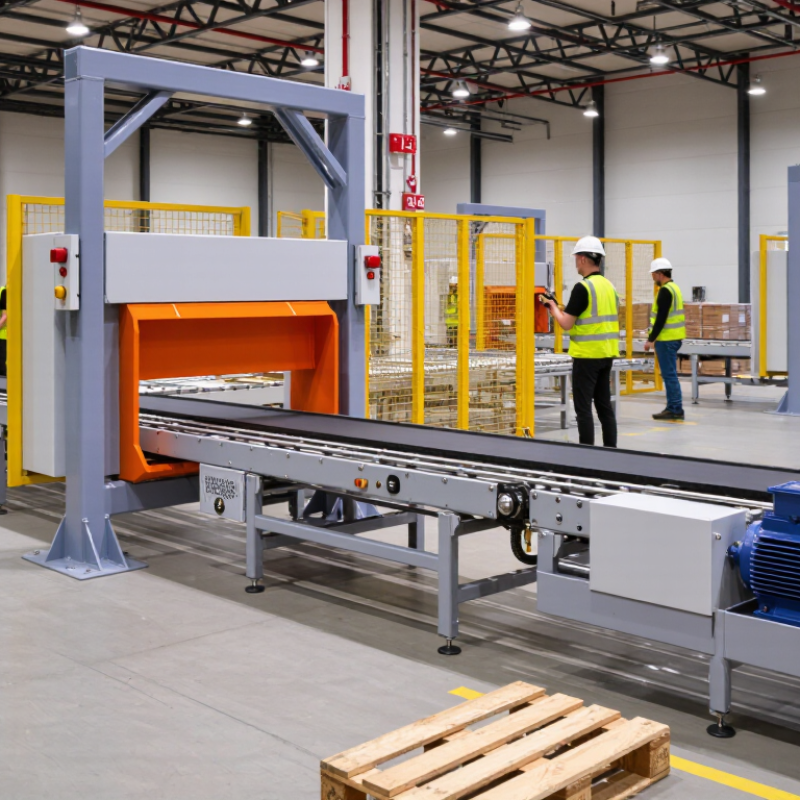
10 Tips for Choosing a Conveyor Belt Transport System

Define the Material Handling Requirements and Conveyor System Goals

10 Tips for Choosing a Conveyor Belt Transport System

Define the Material Handling Requirements and Conveyor System Goals

A conveyor system should begin with the material, not the available floor space. Record each product’s weight, dimensions, surface condition, and expected daily volume. Include unusual cases, such as wet cartons or damaged containers. These details often expose design problems early.

I have seen a line slow down because small packages shifted near a transfer point. The original plan measured average output, but ignored package variation. Measure the heaviest load and the smallest item. Then define the target speed, accumulation time, incline, and discharge location. A simple process map can reveal unnecessary transfers and difficult maintenance access.

Consider the operating environment carefully. Dust, moisture, heat, and cleaning chemicals may affect belt materials and electrical components. Food-related applications may require smooth surfaces and controlled cleaning procedures. Heavy materials need suitable frame strength, roller spacing, and emergency stopping access. Document these assumptions and verify them with load calculations. Do not rely only on supplier estimates.

The goal should be measurable. For example, specify 600 cartons per hour, fewer than two manual lifts per carton, and accessible inspection points. Review noise, energy use, guarding, and operator movement before approving the layout. I once underestimated cleaning time by focusing too heavily on throughput. That mistake changed the final design. Test a representative load when possible. Real products rarely behave exactly like samples.


Compare Conveyor Belt Types, Materials, and Structural Designs

Choosing a conveyor belt transport system starts with the product, not the catalogue. According to Grand View Research, the global conveyor belt market was valued at about USD 5.6 billion in 2023. That growth reflects varied needs, from dusty aggregates to clean food handling. A troughed belt suits bulk materials and long routes. A flat belt works better for cartons and controlled loading. Cleated belts help products climb, but they can increase cleaning time and belt stress.

Material selection needs practical testing. Rubber belts tolerate abrasion and heavy impact. PVC and polyurethane offer smoother surfaces and easier sanitation. Steel-cord construction supports long distances and high tension. Textile belts are lighter and often simpler to splice. CEMA’s Belt Conveyors for Bulk Materials emphasizes proper tension, idler spacing, loading, and belt tracking. A small design error can create large maintenance costs. Measure it.

Structural design matters as much as belt material. Compare fixed frames with modular sections, and check access around pulleys, cleaners, and emergency stops. The 2024 MHI Annual Industry Report identifies labor availability and operational efficiency as major supply-chain concerns. Therefore, choose designs that reduce manual adjustment and make inspections visible. Energy use also deserves attention; a poorly aligned belt wastes power and wears unevenly. I have seen specifications focus too heavily on speed. That is not always wise. Consider load shape, incline, moisture, temperature, cleaning chemicals, noise, and future capacity before approving the final layout.

Evaluate Capacity, Speed, Layout, and Installation Conditions

10 Tips for Choosing a Conveyor Belt Transport System

Evaluate Capacity, Speed, Layout, and Installation Conditions

Capacity comes before belt width. Measure peak hourly load, not only the daily average. Include product surges, moisture, and future growth. CEMA’s Belt Conveyors for Bulk Materials, 7th Edition, recommends calculating belt tension from loading, friction, elevation, and acceleration. A practical design should leave about 15% capacity reserve. More is not always better.

Speed changes product behavior. High speed can reduce spillage but increase dust, impact, and stopping distance. Check the material’s size, fragility, and discharge accuracy. ISO 5048 provides established methods for calculating belt tensions and drive power. Use those calculations with site measurements. A spreadsheet can still be wrong.

Layout decisions affect maintenance. Mark transfer points, emergency access, cleaning zones, and walkway clearance before purchasing equipment. MHI’s 2024 Annual Industry Report found that 88% of supply-chain professionals planned to increase technology investment, yet automation still depends on reliable physical layouts. Consider temperature, humidity, floor loading, power supply, and installation height. The U.S. Department of Energy notes that motor-driven systems can represent more than half of industrial electricity use, so efficient motors and controls deserve early attention. I have seen layouts fail because maintenance space was treated as leftover space. Measure twice. Install once.

10 Tips for Choosing a Conveyor Belt Transport System

Evaluate capacity, speed, layout, and installation conditions before selecting the belt width and conveyor configuration.

The chart shows indicative capacity ranges for troughed belt conveyors handling bulk material at approximately 1.6 t/m³ and a belt speed of 1.5 m/s. Actual capacity depends on material density, trough angle, loading method, incline, belt speed, and safety margins.

Use these values as an early sizing reference, then verify motor power, transfer points, take-up space, access for maintenance, environmental conditions, and installation constraints.

Assess Energy Use, Safety Features, Maintenance, and System Reliability

Choosing a conveyor belt transport system requires more than comparing purchase prices. Energy deserves close inspection. The U.S. Department of Energy’s 2022 Motor Systems Market Assessment reports that motor-driven systems use about 68% of industrial electricity. Select efficient motors, variable-speed drives, and correctly sized belts. Oversized equipment can waste power every hour. Measure energy per tonne moved, not only motor rating.

Safety features should work during hurried maintenance. Install pull-cord emergency stops, guarded nip points, accessible lockout points, and clear warning signals. The International Labour Organization reported 2.93 million work-related deaths globally in 2023. Conveyors are not the only hazard, but poor guarding increases exposure. Test every stop device under realistic conditions. Dust, gloves, and wet floors change human behavior.

Maintenance planning determines reliability. The U.S. Department of Energy’s Operations and Maintenance Best Practices Guide links predictive maintenance with savings of roughly 8–12% compared with preventive maintenance. Add temperature checks, vibration readings, belt tracking inspections, and splice records. Keep critical idlers and sensors available nearby. Some failures are boring. A loose fastener can stop an entire line. I still distrust a perfect spreadsheet; inspection data may be incomplete, and operators may notice problems earlier. Review alarm history with them. Track downtime, mean time between failures, and restart delays. Reliability is measured during the worst shift, not the sales demonstration.

10 Tips for Choosing a Conveyor Belt Transport System - Assess Energy Use, Safety Features, Maintenance, and System Reliability

Use the following practical criteria to compare conveyor belt transport options before requesting a detailed engineering proposal.

Tip Evaluation Area Realistic Data Dimension Typical Reference Values What to Verify Priority
1 Define Capacity and Load Profile Required throughput, peak load, bulk density, lump size, and loading pattern. Specify both normal and peak throughput. A design allowance of approximately 10–20% above the expected peak can help accommodate short-term variation, provided the drive and structure are rated accordingly. Confirm tonnes per hour or units per hour, operating hours per day, start-up frequency, and whether the material is abrasive, sticky, wet, hot, or food-grade. Critical
2 Match Belt Width and Speed Belt width, belt speed, incline angle, transfer geometry, and available floor or ceiling space. Many general industrial systems operate around 0.5–3.0 m/s. Belt widths commonly range from approximately 400–2,400 mm, depending on load and application. Check product stability, spillage risk, noise, required incline, transition distances, and minimum pulley diameter recommended for the selected belt construction. Critical
3 Assess Energy Use Motor rating, belt mass, conveying distance, elevation change, friction, start-up torque, and percentage loading. Use a variable-frequency drive where variable speed or controlled starting is needed. Select motors meeting the applicable IEC 60034-30-1 efficiency class; IE3 or IE4 motors are commonly considered for new industrial installations. Request calculated power at empty, normal, and peak load. Compare annual kWh using the actual duty cycle rather than comparing motor nameplate kW alone. High
4 Check Safety Protection Guarding, emergency stops, nip-point protection, access control, isolation, and safe restart behavior. Apply risk-assessment principles from ISO 12100. Emergency-stop design should follow ISO 13850, while guard distance and openings should be assessed using ISO 13857 or the applicable local regulation. Verify pull-cord or emergency-stop coverage, lockout/tagout provisions, interlocked guards, safe access to head and tail pulleys, and protection against unexpected start-up. Critical
5 Evaluate Belt and Component Life Belt cover grade, tensile rating, splice type, pulley lagging, idler design, and resistance to heat, oil, impact, or abrasion. Choose belt construction based on the material and environment. For elevated-temperature or abrasive service, the belt specification should be supported by documented operating limits and application testing. Ask for belt tensile rating, allowable operating temperature, minimum pulley diameter, splice method, expected wear points, and replacement-part availability. High
6 Plan Preventive Maintenance Inspection frequency, lubrication points, belt tracking, cleaning, tensioning, and spare-parts requirements. A practical baseline is visual inspection each shift or day, housekeeping and tracking checks weekly, and a documented mechanical inspection at least monthly; actual intervals must follow the equipment manual and duty severity. Confirm access platforms, guarding removal time, centralized lubrication, belt-tension adjustment, inspection checklists, and the recommended stock of critical spares. High
7 Measure System Reliability Availability, mean time between failures, mean time to repair, failure modes, and recovery time. Track availability using: Availability = MTBF ÷ (MTBF + MTTR). Set a site-specific target after considering production criticality, redundancy, access, and planned maintenance. Request a failure-mode analysis, service history for comparable duty, response-time commitments, diagnostic information, and a plan for bypass or safe recovery after a component failure. Critical
8 Review Controls and Integration PLC interface, sensors, speed control, level detection, sequencing, overload protection, and data logging. Use zero-speed, belt-misalignment, pull-cord, blocked-chute, and motor-overload protection where the risk assessment identifies the need. Control-system safety functions should be validated to the required performance level or safety integrity level. Check communication protocols, alarm history, remote diagnostics, cybersecurity requirements, automatic restart rules, and compatibility with upstream and downstream equipment. High
9 Consider Operating Environment Dust, moisture, washdown, corrosion, ambient temperature, hazardous areas, noise, and sanitation requirements. Specify enclosure protection using the applicable IP rating standard. For explosive dust or gas atmospheres, equipment classification and installation must follow the applicable hazardous-area regulations; ordinary industrial equipment is not automatically suitable. Verify motor and sensor enclosure ratings, corrosion protection, drainage, cleanability, temperature limits, dust-control measures, and any requirements for hygienic or hazardous-area construction. Critical
10 Compare Total Cost of Ownership Purchase price, installation, energy, labor, consumables, downtime, inspections, upgrades, and disposal. Evaluate the full operating period, such as 5–10 years, and include planned operating hours, electricity tariff, maintenance labor, belt replacement, and the financial effect of unplanned downtime. Use a lifecycle-cost worksheet and compare energy consumption, maintenance hours, spare-part lead times, warranty coverage, training, documentation, and retrofit flexibility. Critical
Note: The numerical ranges are indicative engineering reference values, not universal design limits. Final conveyor dimensions, safety functions, motor sizing, guarding, and inspection intervals must be confirmed through a site-specific risk assessment, material test, duty-cycle calculation, and the requirements of the applicable local standards.

Review Costs, Customization Options, Suppliers, and Future Expansion

10 Tips for Choosing a Conveyor Belt Transport System

Tip 1: Calculate the full cost, not only the purchase price. Include installation, energy use, cleaning, spare parts, and operator training. A cheaper frame may require frequent belt replacement.

Tip 2: Measure the route carefully. Record length, height changes, turning points, product weight, and hourly volume. Small errors can create expensive redesigns.

Tip 3: Request a written cost breakdown from each supplier. Ask which components, testing services, and delivery charges are included. Hidden fees still occur.

Tip 4: Match customization to real operating needs. Choose belt width, speed control, incline angles, and safety features based on product behavior. Avoid paying for decorative options.

Tip 5: Evaluate supplier experience through case records, technical documents, and maintenance support. Ask how quickly replacement parts can arrive.

Tip 6: Inspect sample equipment when possible. Listen for abnormal noise and check belt tracking during operation. This practical step often reveals weaknesses that brochures miss.

Tip 7: Confirm installation responsibilities, warranty limits, and training details before signing. Written evidence is more reliable than informal promises.

Tip 8: Compare lifecycle value, not just quotations. A system with moderate energy use may cost less over five years. My own caution is simple: projected savings are not guaranteed.

Tip 9: Plan future expansion from the beginning. Leave space for extra conveyors, sensors, control panels, and access paths.

Tip 10: Select modular sections where growth is likely. However, excessive flexibility can increase maintenance and initial costs. Review realistic production forecasts. A perfect plan is unlikely. Choose equipment that can adapt without forcing a complete replacement.