Choosing a reliable Industrial Oven Belt manufacturer in China requires more than comparing prices or browsing polished websites. Belt performance affects product quality, oven efficiency, maintenance schedules, and workplace safety. A weak belt may stretch, crack, or leave marks after repeated exposure to heat.
This guide examines leading Chinese manufacturers through practical criteria. These include material selection, temperature resistance, belt structure, joining methods, production capacity, quality control, and after-sales support. We will consider stainless steel mesh, conveyor chain, perforated plate, and other belt designs used in baking, food processing, powder coating, ceramics, and heat-treatment equipment. Details matter. A clean weld, consistent mesh opening, and accurate belt width can prevent costly production interruptions.
Real factory experience also changes the evaluation. A supplier may offer impressive specifications, yet struggle with custom dimensions or urgent replacement parts. That matters. We will look beyond catalogs and ask how manufacturers handle drawings, samples, tolerances, testing records, and installation guidance. Public information is not always complete. Some rankings may therefore require careful verification through factory audits, customer references, or sample testing.
The goal is not to name one universal winner. Oven temperature, product weight, conveyor speed, and cleaning chemicals all influence the right choice. Buyers should match technical evidence with operating conditions. A cheaper belt is not always economical. Nor is the most expensive option automatically reliable. This overview aims to provide a balanced starting point for selecting a capable Chinese Industrial Oven Belt manufacturer with confidence.
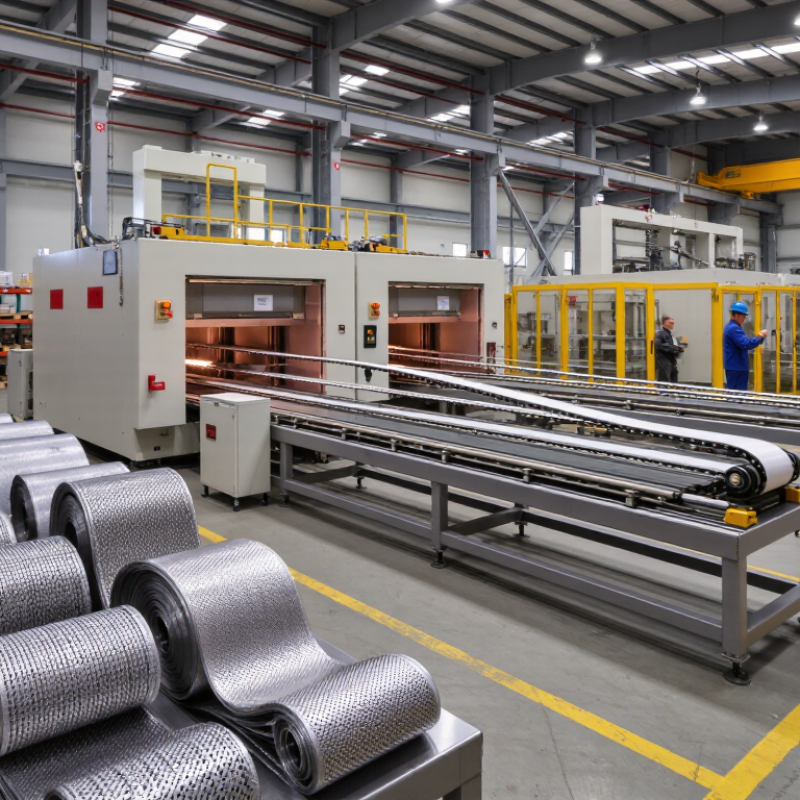
A high-quality industrial oven belt manufacturer in China is defined by engineering discipline, not a polished catalog. The 2024 MarketsandMarkets report estimates the global conveyor belt market will reach about USD 7.9 billion by 2029. That growth increases supplier choice, but it also makes verification harder. Experienced manufacturers should match belt material, mesh opening, wire diameter, and temperature range to the oven process. A belt for baking cannot automatically suit powder coating or heat treatment.
Look closely at production evidence. Reliable factories measure belt width, pitch, flatness, and weld strength before shipment. They should provide material certificates, batch traceability, and temperature testing. ISO 9001 certification supports process control, but it does not prove every belt performs well. Ask for inspection records. Ask for samples.
The International Organization for Standardization reports that ISO 9001 has more than one million certified organizations worldwide. Certification matters, though it is only one signal. Strong suppliers also understand thermal expansion and sprocket alignment. They should explain how the belt behaves after repeated heating cycles. In practice, a belt may look perfect on arrival and still wander after installation. That is why installation guidance, spare-part support, and clear warranty terms matter. No supplier gets every detail right. The honest ones disclose limits, testing conditions, and expected service life instead of promising “zero maintenance.”
China’s industrial oven belt market is led by manufacturers with strong weaving, welding, and heat-treatment capabilities. The most competitive suppliers usually serve food processing, powder coating, electronics, and continuous baking equipment. Their factories often produce stainless steel mesh belts, balanced weave belts, chain-edge belts, and high-temperature conveyor belts.
In practical sourcing work, I examine belt construction before comparing prices. A reliable manufacturer should explain wire grade, mesh opening, belt pitch, joint design, and allowable operating temperature. Factory photos are helpful, but test records are more valuable. Ask for running tension data, weld inspection results, and dimensional tolerances. Some suppliers can produce belts over three meters wide, while others focus on smaller custom assemblies. Production flexibility matters when an oven has unusual sprocket spacing.
The leading Chinese manufacturers are not always the largest exporters. Many strong producers succeed through stable delivery, responsive engineering, and consistent replacement quality. They may support trial orders and provide installation guidance. However, catalog claims can be optimistic. I would not judge a supplier from polished samples alone. A belt may look smooth but still suffer from weak joints, uneven tracking, or distortion after repeated heating. Request a sample run, inspect the edge finish, and verify material certificates before approving regular production. Experiences differ. Even careful evaluations can miss problems that appear only after months of thermal cycling.
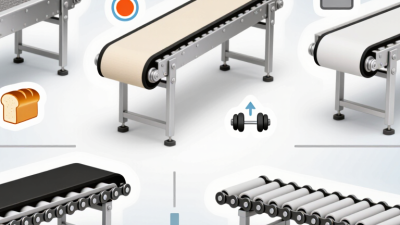
Chinese oven-belt suppliers produce several designs for baking, drying, curing, and heat-treatment lines. Woven wire mesh belts suit biscuits, snacks, and products needing direct airflow. Balanced-weave belts offer smoother tracking and reduce product marks. Chain-driven belts handle heavier loads and long industrial ovens. Rod network belts work well for frozen foods and irregular products. Some manufacturers also produce perforated plate belts for stable trays and delicate parts.
Material selection depends on temperature, load, sanitation, and chemical exposure. Stainless steel is common in food processing because it resists corrosion and repeated washing. High-temperature alloys serve demanding curing and heat-treatment applications. PTFE-coated fiberglass belts support non-stick production, but coating life can shorten under abrasion. According to Grand View Research’s 2024 industrial oven report, the global industrial oven market was valued at roughly US$1.7 billion in 2023, with growth expected near 6% annually through 2030. This expansion is increasing demand for customized belt widths, edge finishes, and tension systems. The choice is not always obvious.
Tips: Ask suppliers for belt temperature limits, open-area percentage, tensile strength, and tracking tolerance. Request a sample drawing. Check weld quality under a magnifier. Also test the belt with your actual product, because laboratory results can look better than production reality. A supplier’s technical sheet may omit cleaning stress, thermal cycling, or loading mistakes. Those details matter.
Typical maximum continuous operating temperatures of commonly produced industrial oven belt types
Chinese industrial belt suppliers commonly manufacture stainless steel mesh, PTFE-coated fiberglass mesh, high-temperature fiberglass mesh, chain-driven rod belts, and perforated stainless-steel belts. The temperature figures are representative engineering limits; actual performance depends on belt construction, load, heating method, speed, and atmosphere.
Comparing Chinese industrial oven belt manufacturers requires more than checking price lists. Start with the belt’s working conditions. Record oven temperature, belt speed, product weight, belt width, and cleaning chemicals. A reliable manufacturer should recommend suitable stainless steel, mesh design, and edge treatment for these details.
Ask for technical drawings, material certificates, and test records. Check whether the stated temperature range reflects continuous operation or only short exposure. That difference matters. Request samples with the same mesh and wire diameter used in production. Test them under real heat and load for several days. Look for distortion, broken wires, uneven tracking, and difficult cleaning. My own mistake was judging a belt after one successful trial. That was too little evidence.
Factory experience also appears in the small details. Does the supplier measure belt length accurately? Can it control welding quality at every joint? Ask how it records batch numbers, inspection results, and corrective actions. A clear answer shows stronger process control.
Visit the facility when possible, or request live production videos and recent inspection photos. Confirm lead times, replacement support, packaging, and export documents in writing. Communication deserves attention too. Slow replies during quotation may become serious delays after installation. Still, polished documents are not proof of performance. Independent testing and references from similar oven applications provide better evidence.
Choosing among China’s industrial oven belt manufacturers requires more than comparing prices. A reliable buyer checks belt material, temperature range, load capacity, and actual production records. The U.S. Department of Energy reports that process heating consumes about 17% of industrial energy in the United States. Therefore, thermal efficiency deserves the same attention as purchase cost.
Ask for measured temperature uniformity across the working chamber. Request test data at minimum, normal, and maximum loads. A strong manufacturer should provide belt tension limits, mesh specifications, spare-part availability, and maintenance intervals. ISO 9001 certification can support process control, but it does not prove oven performance. Ask for independent inspection records and customer references from similar applications. Do not accept attractive photographs as evidence.
Grand View Research has reported continued growth in the global industrial oven market, driven by food, electronics, chemical, and automotive production. That growth increases supplier choices, but also increases comparison risk. A factory visit helps. Still, I would not rely on one visit. Production samples, factory acceptance testing, and documented after-sales response times matter more. Check whether the supplier can control exhaust, insulation, and cooling consistently. Small gaps here can create uneven baking, discoloration, or wasted energy. Buyers should also clarify electrical standards, installation responsibility, and export documentation before signing. My first impression may be wrong. Measured results should decide.
| Evaluation Dimension | Practical Data or Typical Range | What Buyers Should Check | Required Evidence |
|---|---|---|---|
| Product Type | Balanced-weave mesh, chain-driven mesh, rod-reinforced mesh, conveyor belt, and custom modular designs | Confirm that the structure is suitable for the oven load, product size, belt speed, and required air circulation. | Technical drawing, belt construction diagram, and application references without undisclosed claims. |
| Available Belt Materials | Common choices include carbon steel, galvanized steel, 304 stainless steel, 316 stainless steel, and heat-resistant alloys | Select the material according to operating temperature, corrosion exposure, cleaning chemicals, and food-contact requirements. | Material certificate, grade confirmation, chemical-composition report, and corrosion-resistance information. |
| Operating Temperature | Many stainless-steel oven belts operate in the approximate range of 200–600°C; the actual limit depends on alloy, wire diameter, tension, and atmosphere | Do not rely only on a maximum temperature claim. Check continuous operating temperature, peak temperature, belt load, and heating-cycle duration. | Written temperature rating, test conditions, recommended safety margin, and operating manual. |
| Belt Width | Custom industrial belts are commonly produced from narrow laboratory widths to approximately 3,000 mm or more, depending on the construction | Verify usable conveying width, overall width, edge clearance, installation space, and compatibility with the existing oven frame. | Dimensioned drawing, tolerance table, and sample measurement report. |
| Wire Diameter and Mesh Opening | Typical wire diameters are approximately 0.5–6.0 mm; mesh openings vary widely according to product size and airflow needs | Check product stability, drainage, airflow, heat transfer, belt strength, and the risk of small products falling through the mesh. | Wire-diameter specification, mesh-opening drawing, and tolerance data measured at multiple points. |
| Dimensional Tolerance | Tolerance must be agreed for belt width, length, pitch, opening size, edge treatment, and sprocket engagement; the exact values are design-specific | Require a signed tolerance sheet instead of accepting general statements such as “standard size” or “high precision.” | Approved production drawing, inspection plan, and final dimensional inspection record. |
| Drive and Edge Configuration | Common designs include friction drive, sprocket drive, chain-edge drive, rod drive, and welded or reinforced edges | Match the belt to the oven's drive shaft, sprocket pitch, tracking system, turning radius, and take-up arrangement. | Drive compatibility drawing, sprocket dimensions, edge construction details, and installation instructions. |
| Load Capacity | Capacity depends on belt width, span, support arrangement, wire diameter, temperature, speed, and product distribution; it should be calculated for each application | Ask for allowable load per metre and total load under actual operating temperature, not only an unloaded belt rating. | Engineering calculation, load test data, support-spacing recommendation, and safety factor. |
| Temperature Expansion | Metal belts expand when heated; thermal expansion is influenced by material, belt length, temperature rise, and restraint conditions | Confirm the required take-up travel, operating sag, tracking method, and cold-to-hot length change. | Thermal-expansion calculation, recommended tension range, and commissioning procedure. |
| Surface Finish and Cleanability | Options may include standard mill finish, polished surfaces, electropolishing, or special cleaning treatment where technically appropriate | For food, pharmaceutical, or hygienic applications, check dead zones, weld quality, cleanability, and resistance to the approved sanitation process. | Surface-finish specification, weld-inspection record, cleaning compatibility statement, and hygiene documentation. |
| Manufacturing Quality Control | Important controls include incoming-material inspection, weaving accuracy, welding quality, belt geometry, tension, and final run testing | Determine whether inspection is performed in-house and whether nonconforming belts are traced and corrected before shipment. | Quality-control plan, inspection checklist, calibration records, and sample final-inspection report. |
| Standards and Certifications | A management-system certification such as ISO 9001 may support process control; it does not by itself prove belt suitability or product quality | Check certificate validity, scope, issuing body, and whether the certificate covers the actual manufacturing site. | Current certificate, verification link or certificate number, product-specific declarations, and audit documentation where required. |
| Sample and Pilot Testing | A sample section or trial belt should be tested under representative speed, temperature, load, cleaning, and operating-cycle conditions | Use the same product, oven settings, belt support, and drive components that will be used in production. | Signed test protocol, test results, photographs or videos, and acceptance criteria agreed before production. |
| Lead Time and Production Capacity | Lead time varies with belt type, dimensions, raw-material availability, tooling, quantity, and inspection requirements | Separate sample lead time from mass-production lead time and confirm the supplier's capacity during peak periods. | Written production schedule, capacity statement, order milestones, and late-delivery responsibility. |
| Packaging and Export Protection | Belts should be protected against deformation, moisture, impact, and contamination during storage and international transport | Confirm coil or flat-pack method, lifting points, moisture protection, crate strength, and marking requirements. | Packaging specification, loading photographs, packing list, and shipping-damage procedure. |
| After-Sales Support | Useful support includes installation guidance, belt tracking instructions, tension recommendations, spare parts, and troubleshooting | Check response time, availability of replacement components, warranty exclusions, and technical communication capability. | Warranty terms, service contacts, spare-parts list, maintenance guide, and escalation procedure. |
| Recommended Buyer Decision Rule | Choose the manufacturer that demonstrates technical compatibility, repeatable quality, documented testing, and dependable support—not merely the lowest quotation. | Compare suppliers using the same technical specification, acceptance criteria, delivery terms, warranty scope, and total cost of ownership. | Completed supplier questionnaire, approved drawing, sample-test result, commercial quotation, and signed quality agreement. |