Choosing the right Food Conveyor Belt can reshape daily production, not merely move products from one station to another. In a busy bakery, warm loaves travel across a belt while operators inspect surfaces, adjust spacing, and prepare packaging. In a chilled facility, the belt must handle moisture, frequent sanitation, and changing product weights. Small design choices matter.
W. Edwards Deming, a respected quality-management authority, said, “Quality comes not from inspection, but from the improvement of the production process.” This principle fits conveyor selection closely. A suitable Food Conveyor Belt can reduce manual handling, improve product flow, and support more consistent portion control. It may also reduce accidental contact between workers and ready-to-eat products. That matters.
The best system depends on more than speed. Belt material, frame construction, motor placement, incline angle, cleaning access, and temperature resistance all deserve careful review. Hygienic design should leave fewer hidden edges where crumbs, oil, or water can collect. Maintenance teams should reach bearings and rollers without dismantling half the line. That detail is often overlooked.
No belt is perfect.
A conveyor can still create waste when its speed exceeds upstream production. It can also damage delicate pastries if the transfer gap is poorly designed. Businesses should test real products, not rely only on catalog specifications. Measure noise, cleaning time, belt tracking, and operator comfort. Then question the results. A slightly slower system may prove more reliable, safer, and cheaper over several years. That is the practical reason to investigate a Food Conveyor Belt before purchasing one.
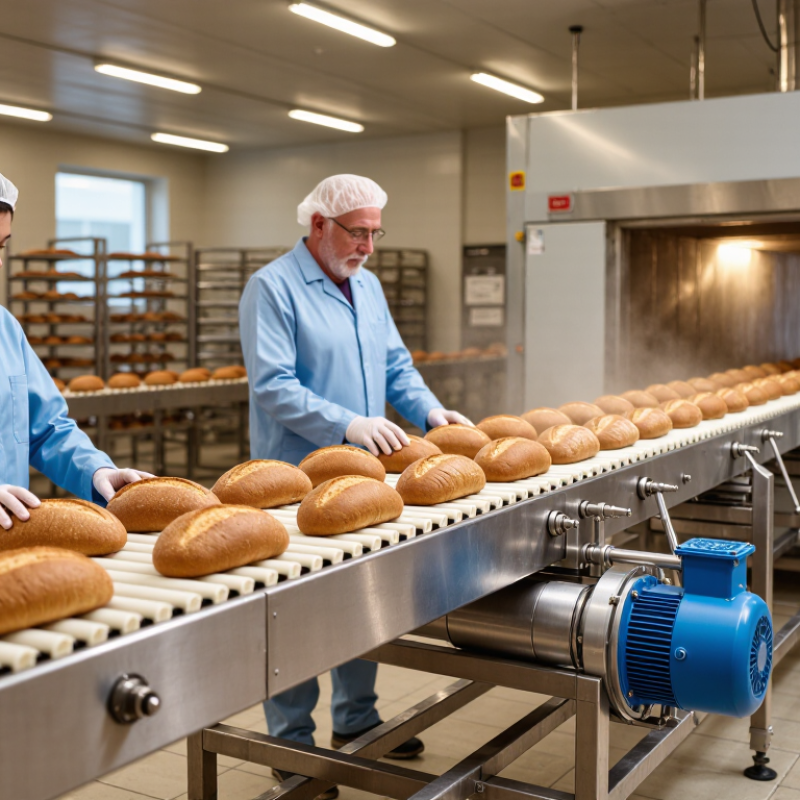
A food conveyor belt is a continuous, food-grade surface that carries products between processing, inspection, cooling, and packing areas. It may use polyurethane, stainless steel, or other materials suited to moisture and temperature changes. The belt runs around pulleys, while a motor controls its speed. Simple movement. Yet the system depends on careful design.
Products travel in a steady line instead of being moved by hand. Guides help keep items centered, while sensors can detect gaps, jams, or misplaced products. For example, sliced vegetables may pass through washing, draining, sorting, and packaging stations on one coordinated route. Belt speed must match each task. If it moves too quickly, workers may miss defects. If it moves too slowly, production capacity suffers.
Hygiene is a central concern. Smooth surfaces, open frames, and removable parts make cleaning more practical. Drainage also matters, especially near washing stations. In daily operation, residue can collect beneath rollers or around poorly sealed joints. That detail is easy to overlook. Regular inspection should check belt tension, tracking, motor noise, and surface damage. A conveyor is not a magic solution. Poor maintenance can create delays and contamination risks. The right system should fit the product, room layout, cleaning routine, and required throughput, rather than simply offering the highest speed.
A food conveyor belt continuously transports products between processing stages while helping reduce manual handling and maintain a consistent production flow. The chart shows representative operating-speed ranges commonly used in food-processing applications. Actual settings depend on product size, belt design, sanitation requirements, line layout, and processing time.
Planning reference: typical industry ranges shown in metres per minute (m/min), not guaranteed equipment limits.
Food conveyor belts support far more than simple product movement. They can carry raw vegetables from washing stations to sorting tables, keeping products off the floor. Operators can inspect color, size, and visible damage while items move at a controlled speed. Cutting, slicing, weighing, and portioning stations also benefit from steady belt movement. Inclined conveyors can lift packaged goods between production levels without excessive manual handling.
In chilled processing areas, belts can move products toward cooling or freezing equipment while maintaining an orderly flow. They also support filling, labeling, sealing, and final package inspection. Food-contact surfaces should be smooth, corrosion-resistant, and easy to clean. Open-frame designs can improve access around rollers and belt edges. Small details matter. A belt that is difficult to sanitize may create more work and increase contamination risks. Proper tension and speed control can also reduce bruising, spills, and uneven portions. However, a conveyor is not automatically the best solution. Very soft products may require gentler handling, and sticky mixtures can behave unpredictably on ordinary surfaces. Production teams should test belt texture, incline, temperature range, and cleaning procedures before installation. Records of inspections and sanitation checks can support reliable operation and help identify recurring problems. Be realistic: a faster line is not always a better line.
Food conveyor belts can turn a crowded production floor into a steadier, more measurable workflow. They move ingredients, trays, and sealed packages at a controlled speed, reducing lifting and unnecessary hand transfers. This consistency helps teams manage portions, timing, and product flow during busy shifts. Workers can focus on inspection, preparation, and sanitation instead of carrying containers across the room. Less carrying means fewer interruptions. It may also reduce physical strain.
The strongest business benefit is often improved throughput without immediately adding more staff. A properly sized belt connects washing, cutting, cooking, cooling, and packing areas with fewer delays. Operators gain a clearer view of bottlenecks, while production records become easier to compare between shifts. Food-grade surfaces, open designs, and easy-access components can support thorough cleaning. However, “easy to clean” is not automatic. Crumbs, moisture, and residue still collect around joints, edges, and support rollers.
The belt is not magic. Belt speed, incline, load capacity, noise, and washdown requirements must match the real process. An optimistic production plan can create avoidable problems. Conveyors may lower handling costs, but they require inspections, tension checks, and timely part replacement. A low-cost installation can become expensive during peak production if it stops unexpectedly. In practice, testing real products on the belt reveals slipping, damage, or awkward operator movement that specifications may miss. Small details matter. A short trial often exposes weaknesses before they affect daily output.
Choosing a food conveyor belt starts with the product, not the catalog. A soft pastry needs gentle handling, while frozen meat requires resistance to cold, moisture, and abrasion. Define the product weight, temperature, size, and surface texture first. Then calculate speed, incline, loading pattern, and daily operating hours. Small details matter. A belt that slips during a wet washdown can create delays, waste, and safety concerns.
Sanitation should guide the system design. The FDA Food Code 2022 emphasizes smooth, corrosion-resistant, and easily cleanable food-contact surfaces. Select open-frame construction, sealed bearings, and quick-release components where possible. USDA estimates that 30–40% of the U.S. food supply is lost or wasted. A poorly controlled transfer point can contribute to that problem. In practical plant assessments, engineers often focus too heavily on belt width. They sometimes overlook product transfers and cleaning access.
Labor availability also deserves attention. The MHI 2024 Annual Industry Report identified workforce shortages as a major challenge for 55% of surveyed supply-chain professionals. A conveyor system should therefore support simple adjustments, clear diagnostics, and predictable maintenance. Consider variable-speed control, sensor placement, washdown procedures, and spare-part access before approving the design. Test the belt with real products, not empty trays. The first trial may expose tracking problems, dead zones, or unexpected product damage. That feedback is valuable, even when the original specification looked correct.
A food conveyor belt can improve flow, but safety must shape the purchase. OSHA reports that machine-related incidents cause about 18,000 serious injuries and 800 deaths each year in the United States. Guards, emergency stops, and accessible isolation points are not optional details. They should be tested during routine shifts, not only during audits. Keep hands away from nip points near rollers and transfer zones. Use lockout/tagout before cleaning, adjustment, or belt removal, as required by OSHA 29 CFR 1910.147.
Hygiene depends on the belt’s design and daily discipline. The FDA Food Code 2022 requires food-contact surfaces to be smooth, corrosion-resistant, nonabsorbent, and easily cleanable. Choose open-frame construction, sealed bearings, and belt materials suited to the product and cleaning chemicals. A belt may look clean while debris remains under a pulley. That is the uncomfortable part. Inspect scrapers, fasteners, sidewalls, and belt edges for cracks or trapped residue. Record findings with photographs and corrective actions.
Maintenance should follow measured conditions, not guesswork. The U.S. Bureau of Labor Statistics reported 2.6 million nonfatal workplace injuries and illnesses in private industry during 2023. Preventive checks can reduce avoidable exposure, although they cannot remove every risk. Check alignment, tension, motor temperature, and unusual noise before production begins. Keep spare components dry and labeled. Review the schedule when a belt repeatedly slips. The plan may be wrong. Test it.
| Factor | Practical Benchmark or Requirement | Why It Matters | Recommended Control or Maintenance Action | Suggested Review Frequency | Risk Level |
|---|---|---|---|---|---|
| Food-contact material | Use a belt material that is suitable for the food type, operating temperature, cleaning chemicals, and intended application. | Material incompatibility can cause belt deterioration, contamination, or loss of mechanical strength. | Keep supplier declarations and material specifications on file. Check the belt for swelling, cracking, discoloration, or surface breakdown. | Before installation and during every scheduled inspection | High |
| Cleanability and hygienic design | Surfaces should be smooth, accessible, and free from unnecessary gaps, dead areas, and dirt traps. | Hard-to-clean areas can retain food residue and support microbial growth. | Use documented cleaning and sanitation procedures. Inspect belt edges, splice areas, supports, scrapers, and transfer points. | After each production run or according to the validated sanitation schedule | High |
| Belt tracking and alignment | The belt should run centrally without rubbing the frame, guards, or conveyor structure. | Poor tracking accelerates edge damage and may create product spillage or an entanglement hazard. | Check alignment, pulleys, idlers, tension, and frame level. Correct the root cause instead of repeatedly adjusting the belt. | Daily visual check; detailed inspection weekly | High |
| Belt tension | Maintain tension within the belt manufacturer's specified operating range. | Over-tensioning increases stress on bearings and shafts, while under-tensioning can cause slipping and mistracking. | Measure or verify tension using the approved procedure. Inspect take-up devices and record adjustments. | Weekly and whenever slippage or tracking problems occur | Medium |
| Emergency stopping | Emergency-stop devices should be accessible, clearly identified, and connected to the conveyor control circuit. | Rapid shutdown helps reduce injury severity during entanglement, blockage, or other emergencies. | Test emergency stops under the site's lockout and safety procedure. Do not operate the conveyor if a safety device fails. | Before use where required and at the interval defined by the risk assessment | High |
| Guards and nip points | Moving parts such as pulleys, sprockets, chains, and pinch points should be guarded where access could cause injury. | Unprotected moving components can cause crushing, shearing, or entanglement injuries. | Inspect guards for secure attachment and damage. Never remove guards during operation; isolate energy before maintenance. | Daily visual check and after any modification | High |
| Lockout and isolation | Electrical, pneumatic, hydraulic, and stored mechanical energy must be isolated before cleaning or maintenance. | Unexpected startup or release of stored energy is a major maintenance hazard. | Apply the site's lockout/tagout procedure, verify zero energy, and allow only trained personnel to perform servicing. | Every time maintenance, clearing, or deep cleaning requires entry into a danger zone | High |
| Cleaning chemicals and water temperature | Cleaning agents, concentration, water pressure, and temperature should be compatible with the belt and conveyor components. | Incompatible chemicals or excessive heat can damage belt surfaces, seals, bearings, and electrical components. | Follow the approved sanitation chemical instructions. Rinse thoroughly where required and avoid directing high-pressure water at sensitive components. | Every cleaning cycle | High |
| Splices and fasteners | Splices should be smooth, secure, and suitable for the belt design and food-processing environment. | Damaged or raised splices can harbor residue, damage products, or cause belt failure. | Inspect for separation, sharp edges, exposed wires, broken fasteners, and product-contact damage. Replace defective splices promptly. | Daily visual check; detailed inspection weekly | High |
| Wear and surface condition | There should be no cuts, holes, frayed edges, excessive abrasion, delamination, or embedded foreign material. | Surface damage may contaminate food, reduce conveying performance, and lead to unexpected belt failure. | Record defects with photographs or measurements. Remove the belt from service when damage could affect food safety or operator safety. | Daily visual inspection | High |
| Lubrication and bearings | Use only lubricants suitable for the equipment and the risk of incidental food contact, where applicable. | Insufficient or excessive lubrication can cause overheating, leakage, bearing failure, or product contamination. | Follow the equipment maintenance schedule. Check for unusual noise, heat, vibration, grease leakage, and loose bearings. | Weekly condition check; lubrication according to manufacturer instructions | Medium |
| Conveyor speed and load | Operate within the rated speed, load, incline, and temperature limits of the conveyor system. | Overloading or excessive speed increases wear, spillage, belt stretch, and the likelihood of product or equipment damage. | Monitor throughput and motor load. Keep product distribution even and prevent accumulation at transfers and discharge points. | Each production shift and after process changes | Medium |
| Foreign-material control | The belt and surrounding equipment should not introduce metal, plastic, rubber, or other physical contaminants. | Fragments from damaged belts, scrapers, fasteners, or guards can become physical food hazards. | Include conveyor components in the site's foreign-material inspection program and investigate every missing or damaged part. | Every shift and after maintenance | High |
| Preventive maintenance records | Inspection findings, repairs, cleaning verification, and replacement dates should be documented and traceable. | Records help identify recurring failures and demonstrate that safety and hygiene controls are being managed. | Use a checklist with date, equipment identification, defect description, corrective action, responsible person, and completion status. | Every inspection and maintenance activity | Medium |
| Operator training | Operators should understand normal operation, basic inspection, emergency stopping, cleaning limits, and defect reporting. | Early reporting and correct operation reduce downtime, contamination risk, and preventable injuries. | Provide documented induction and refresher training. Restrict repairs and guard removal to authorized personnel. | At onboarding, after process changes, and at the site's refresher interval | Medium |
Note: Inspection and maintenance intervals should be adapted to the conveyor design, production environment, cleaning method, operating hours, risk assessment, and applicable local food-safety and workplace-safety requirements.